Jill Kravetz runs the Harvard Innovation Labs, the hub serving 3,000 students and alumni across all 13 Harvard schools. She has spent her career deciding which ideas hold up: A decade in strategy consulting, the first female partner at The Parthenon Group, a chain of beauty lounges she launched that is now publicly traded, and 10 years mentoring founders before she was appointed to lead the place.
On the night of Harvard’s President’s Innovation Challenge she was on stage in front of the university’s innovation community, at the end of a full day of rehearsals and before 2 after parties. She wore IAMBIC® MODEL T precision-fit shoes. She expected to lose the following day to recovery. She worked out the next morning.
She has worn the pair regularly since, including on vacation. She purchased her pair. IAMBIC was founded out of the Harvard Innovation Labs, before Jill was appointed to lead it. What follows is her account, in her words, from a recorded conversation.
Lightly edited for length and readability.
Key takeaways
- Jill Kravetz runs the Harvard Innovation Labs and has evaluated companies for a living for over a decade.
- Her campus takes 20 to 25 minutes to cross on foot, and she walks 40 to 45 minutes between appointments across all 13 Harvard schools.
- She wore the MODEL T through rehearsals, a stage appearance and 2 after parties, then worked out the following morning.
- The fit held from a 5-minute intake, which she says she did not expect from a process that simple.
- She gets blisters in other sneakers and has never had one in the MODEL T.
- She reads the purchase as both a health investment and an evergreen style choice.
“I was skeptical that such a basic intake process could produce shoes that fit this well. But they do.”
Jill Kravetz, Bruce and Bridgitt Evans Executive Director, Harvard Innovation Labs

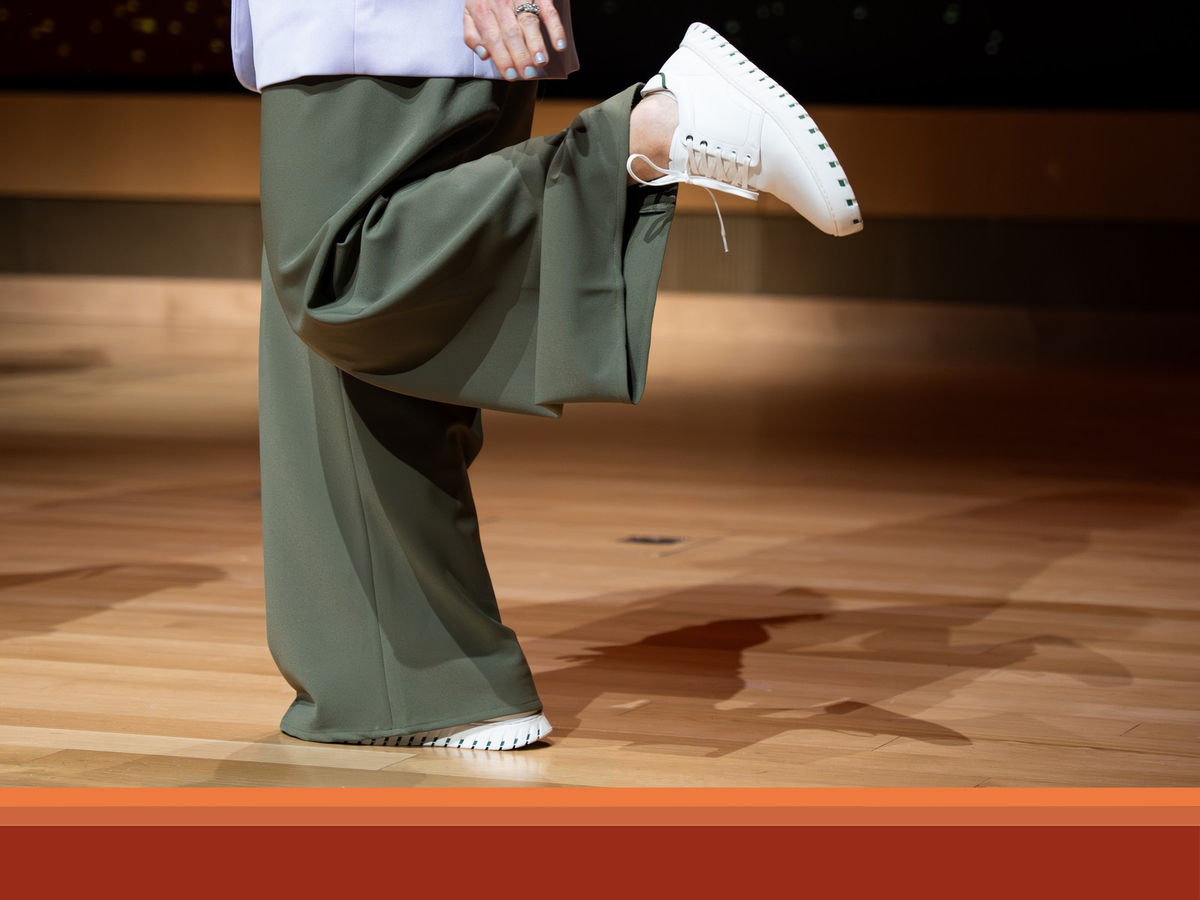
Jill Kravetz on stage at Harvard’s President’s Innovation Challenge, in the MODEL T.
Who is evaluating these shoes
Jill Kravetz is the Bruce and Bridgitt Evans Executive Director of the Harvard Innovation Labs, the university-wide hub for entrepreneurship at Harvard. She runs it for 3,000 students and alumni across all 13 Harvard schools, and it stages the President’s Innovation Challenge, the competition she was on stage for the night described here.
She began her post-MBA career at Monitor Company, spent 10 years in strategy consulting and was the first female partner at The Parthenon Group, a leading global strategy consultancy, advising large companies across industries.
She moved from advising companies to building them. She launched MiniLuxe, a chain of nail and beauty lounges, as a partner at the Cue Ball Group and led it as president. MiniLuxe is now publicly traded in Canada.
She co-founded Gloss48, an e-commerce platform for independent beauty brands, and was its CEO. She has stepped into interim operating roles at several startups since.
She mentored founders at the Harvard Innovation Labs for 10 years as a volunteer before she was appointed to lead it. She holds a bachelor of science in biology from Queen’s University and an MBA from the Wharton School.
Assessing whether a product does what it claims is the work she has done her whole career.
What does a long day on your feet actually cost?
How much of your day is spent standing and walking?
“It’s so demanding. I’m standing at my desk right now. There’s a lot of what I call ‘retail’ work — going to different places on campus, visiting different schools. I meet with the deans of all 13 schools, with faculty, with innovators. Everything is in walking distance, so I’m constantly on my feet. I like that, but it can be taxing.”
How much ground does that cover?
“It’s a very big campus. It takes 20 to 25 minutes to walk across the river to Harvard Square, where a lot of the schools are based. So I’m always on the go – walking to and from meetings. We also have so many events at the iLab, so I’m constantly on my feet, standing, talking to people, meeting with founders.”
Had you ever connected footwear to your energy?
“Before IAMBIC, I don’t think I really connected it to energy or stamina beyond what was going on in my feet. It was a very localized understanding of stress on my feet. I’d get off my feet and I’d notice how sore my feet were.
My first job was when I was 15, working at a restaurant on my feet. I remember coming home from those days with the scent of pizza coming out of my pores, my feet feeling like blocks. I never really thought about the impact it has on the rest of my well-being.”
What were you wearing back then?
Before Harvard, Jill was a founder herself, raising money for companies she had started.
“As a founder, I remember taking the train to New York to do pitches with investors all day. And I just remember shoving my feet into these painful shoes to look professional. And why? Why did I do that?”
A long day does not stop at the feet. Load that lands unevenly travels up, and the cost shows up as fatigue, never as pain in a specific place. An F1 cinematographer describes the same cost across 12-hour shoot days.
How do you recover from a long day on your feet?
What did the end of that night feel like?
“On the night of the President’s Innovation Challenge, I wore these all day. I tried them on before, but I hadn’t worn them before that day because I didn’t want them to get scuffed. With rehearsal after rehearsal, I was fully expecting my feet to be killing me by three o’clock in the afternoon, just because I’m not used to being on my feet so much during the day.
At the end of the night we had an after party, and another after after party, so still a lot of standing. And my feet literally felt like clouds. I wasn’t conscious of a feeling of pain or discomfort of any kind.”
“My feet literally felt like clouds.”
Jill Kravetz, on the night of Harvard’s President’s Innovation Challenge
What was the next day like?
“I am an introvert, and this is a fairly public-facing role. It’s challenging for me to get up the energy to be public-facing, so anything I can do to reduce stress during those moments is really critical. I’ll come home from a day of multiple meetings and presentations and events and shaking hands, and I need some downtime to recuperate!
When I wore the IAMBIC sneakers at the President’s Innovation Challenge, which was a big extroverting event for me, I fully expected the next day to be flattened. I thought -- there’s no way I’m moving anywhere. I actually felt great – I had a lot of energy! I even worked out.”
What did people ask you afterwards?
“When I was on the stage with the shoes on, I did a little jump in the shoes.
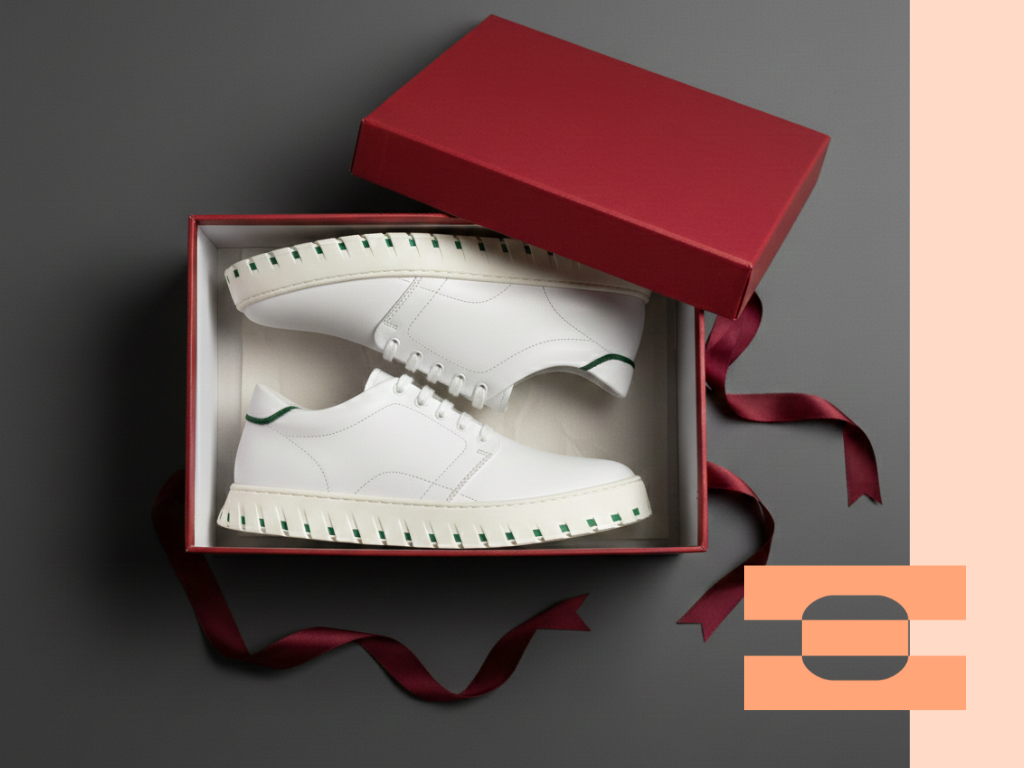
Afterwards everyone came up to me to see them. They wanted to know if they were comfortable, how long I had been wearing them. They loved the green design detail. They wanted to touch and feel them.”
What happened when you traveled without them?
“Last week I was on vacation and I couldn’t take many pairs of shoes. So I took a pair of Nikes I work out in, and I left my IAMBICs at home.
I was out walking the first morning in my Nikes and pretty quickly new blisters formed, followed by blood gushing from the backs of both of my heels onto these white Nikes. They’re super soft (like socks!) – I was really surprised and wished I had my IAMBICs with me, because I don’t get blisters with the IAMBICs. I’m bringing them with me next time.”
Soft material is a different thing from a shoe that fits. A blister forms where a shoe moves against skin, and a soft upper sitting in the wrong place still moves. IAMBIC has covered the difference between cushioning and support in detail.
What does a foot scan actually measure?
What was the virtual consultation like?
“At first, when I learned about the process, I was worried it would be too involved. It was so easy. It took me 5 minutes max. Very straightforward, easy to understand. I know I was offered a concierge walkthrough. I did not need it.
I was actually skeptical that with such a basic intake process the shoes would end up being such a good fit. But they were.”
What stood out about how your feet were analyzed?
“I was impressed with the various angles I took photos of. There’s the width I’m always struggling with. I can’t fit into certain brands because while I don’t have a wide foot, but I don’t have a narrow foot either.
But the fact that it took my arch into account, that piece almost never seems to be evaluated when you’re fitting shoes in a store. I’m not an expert by any stretch of the imagination, but I feel like if the arch isn’t right, that does cause a fair bit of pain. At least for me, that’s what I’ve experienced with other shoes. So I love that it took that into account, and you really get that side profile when you take the inside shot.”
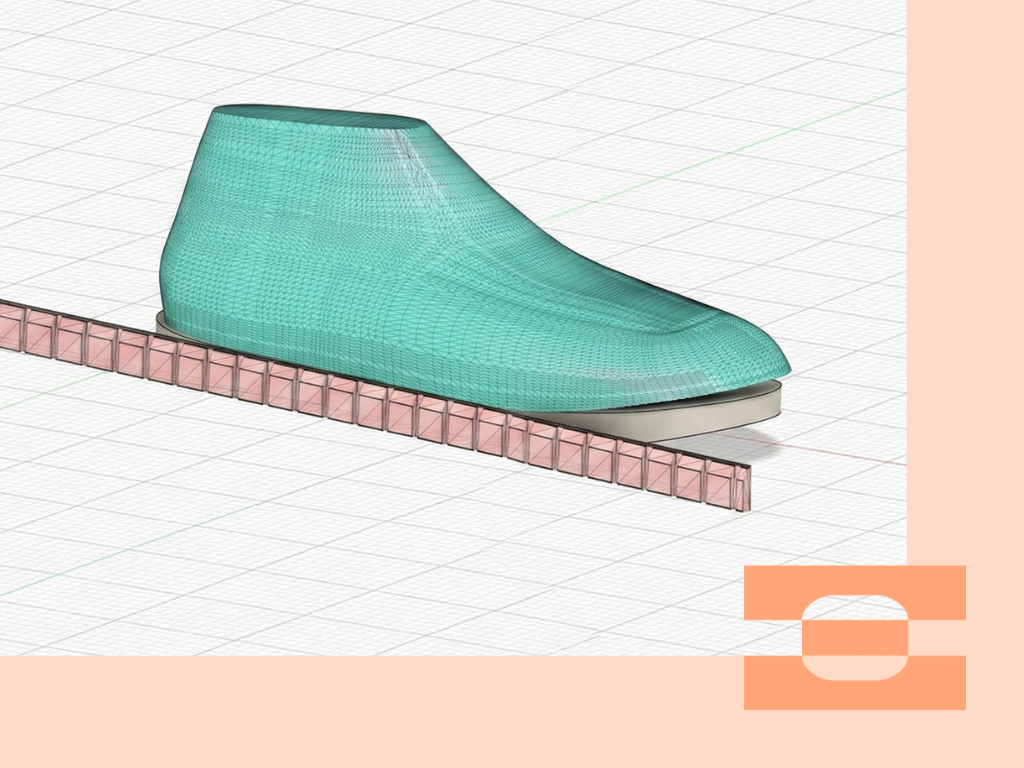
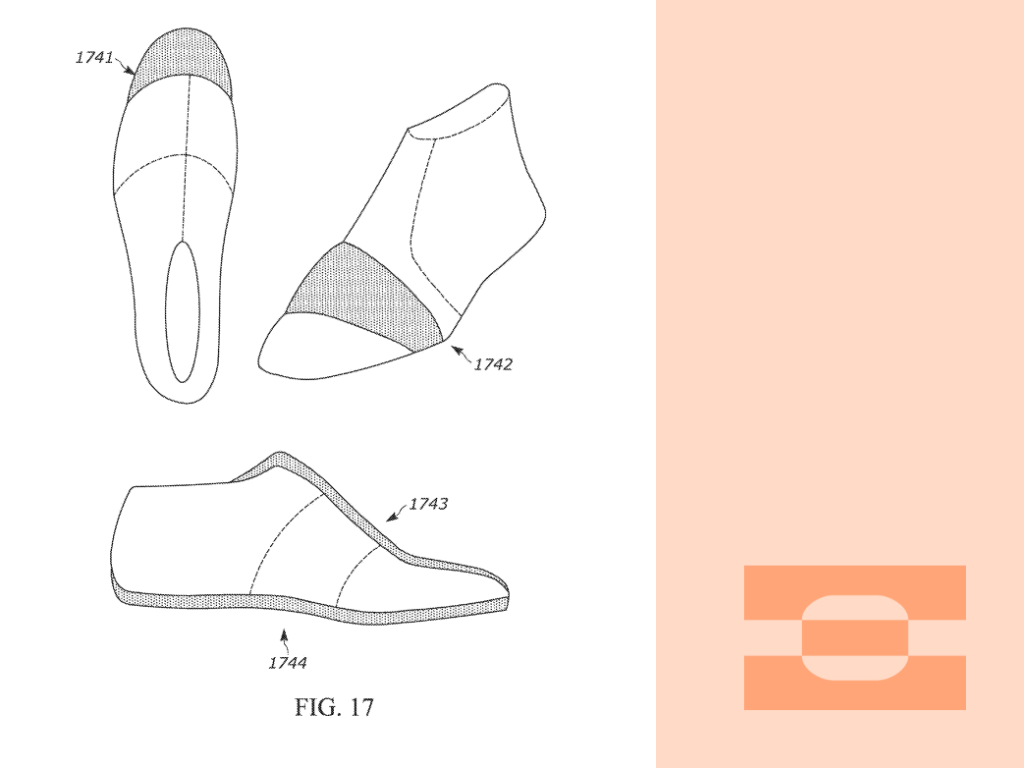
A 2018 systematic review in the Journal of Foot and Ankle Research found that between 63 and 72 percent of people are wearing shoes that do not match the length or width of their feet. Arch position is measured less often than either. Advanced smartphone 3D scanning reads 20 biometric variables to the millimeter and generates a last built for 1 person, which is why arch depth is part of the shoe and never something added inside it. The method is set out on the IAMBIC technology page.
IAMBIC is not a medical device and does not diagnose or treat any condition.
What makes a shoe feel supportive?

The MODEL T in white, with the green sole detail Jill mentions.
Which parts feel most supportive?
“The most supportive part I would say is the sole. I like a hard shoe. I found that the sole is like a firm mattress. It’s not hard like a board, but it’s firm, and for me that’s very comfortable.
The second thing is in the back here, there’s no rubbing. Another thing that’s so great about the way you take the measurements is you know exactly what’s going to create a rub and what’s not. So there are no blisters happening.
The other thing is the part around the top of my foot. I’ve never quite had shoes fit like this. When I first put them on I was like, ooh, are they a little snug? But then no, they’re not snug. They actually fit to my foot. They just don’t move. It’s not a tight feeling. It’s just like, I’m at home. My feet feel at home.”
“It’s just like, I’m at home. My feet feel at home.”
Jill Kravetz, on how the MODEL T fits across the top of the foot
How do they handle impact?
“Even though it’s a firm bottom, there is nice cushioning. When I jump in them, they’re great. I feel nothing when I land. It’s like a cloud. They also come up fairly close to the front of my ankle, which I like. I almost don’t even need to tie them up. They really do just fit and stay on my feet. And I’ve worn them a fair bit, and there’s almost no wear on the bottom.”
Is this a health purchase or a style purchase?
How do you think about the MODEL T as an investment?
“The thing I love about the IAMBICs is that they’re stylish, they’re cool looking, but they’re not trendy. They’re not a fad. If you went back 20 years, this style, not exactly but similar, this is going to be evergreen.
If I’m buying sneakers, a lot of times I’m worried about whether this is going to be fashionable in a year. If I spend this much money, am I going to wear it in 2 years, 3 years? Because the style is fairly neutral but elevated, it’s going to stick around. So part of the investment for me is the fashion and the style, and how it will stick around.
But the second part is just investing in my health. Given the experience I’ve had so far, when I wear them for long days, when I’m on a very extroverted day and there’s a lot of energy being sapped from my body, that I’m able to recover quickly, that I’m able to feel no pain on my feet, is just so important to me.
You invest in yoga classes, you invest in workouts, you invest in workout gear. If you add it up, everything you invest in for your health, investing in a pair of shoes that’s going to last you a long time, that is an amazing fit, and where you can immediately feel the results, is critical.”
Her answer is both, and the 2 halves hold each other up. A shoe that stays wearable for years spreads its cost across every one of them, which is what a pair costs over time. Athletech News tested the same $600 question across 20,000-step days.
Sources
- Buldt AK, Menz HB (2018). Incorrectly fitted footwear, foot pain and foot disorders: a systematic search and narrative review of the literature. Journal of Foot and Ankle Research, 11:43.
- IAMBIC Engineering and Biomechanics Lab (2026). Fit dataset, more than 50,000 scans.
Related IAMBIC coverage
- Why Harvard keeps backing IAMBIC
- Do precision-fit shoes work? A Wall Street Journal feature
- How a last is generated, and why fit starts there
See what a last built from your own measurements feels like
HSA/FSA eligible. Unlimited refits included.