Most executives pack for a business trip with a contingency plan: one pair for the flight, one for the meeting, sometimes a third for dinner or the conference floor, because none of them can be trusted through a whole day. That is a lot of luggage space given to footwear, and it is the clearest sign that none of the shoes actually fit.
The airport test follows one pair through a full working travel day and asks whether it passes five checkpoints. If you have never owned a shoe that passes all five, the reason is usually the shoe.
If you want the most comfortable shoe for travel in general, that question has its own article. This one is about the business day.
The five checkpoints
1. The security line
You take them off, then put them back on, standing up, in a line, with a bag in one hand. A shoe that needs a shoehorn or a fight with the laces fails here. So does one you would rather not have strangers see in the bin.
2. The flight
Feet swell on long flights, because you are sitting for hours with your legs down. A shoe that fit at 7 a.m. is being asked to fit a slightly larger foot by the time you land. If it was already close to its limit at the forefoot, that margin disappears somewhere over the Rockies, and the first meeting begins with a pressure point that will still be there at dinner.
3. Straight to the meeting
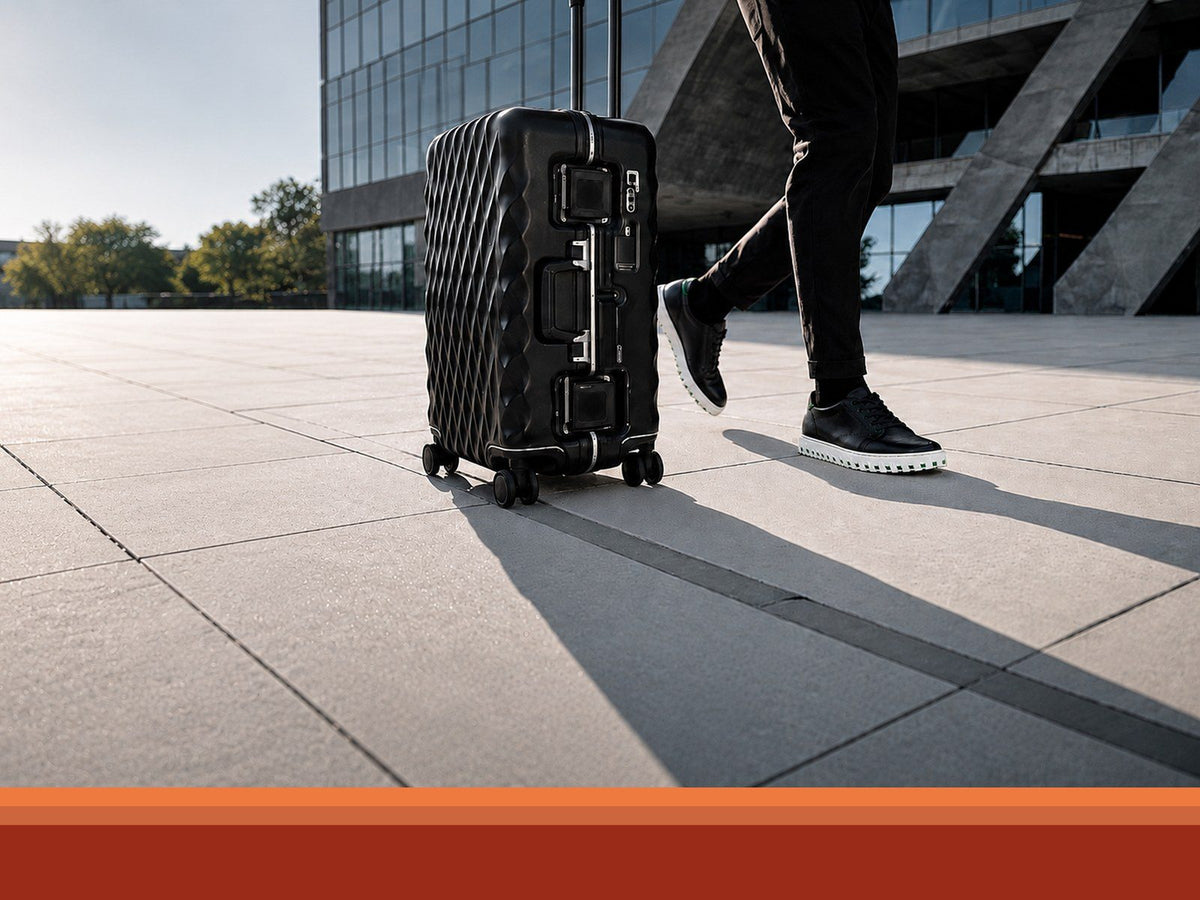
There is no hotel stop. You walk into the client’s office in whatever you flew in. This is the checkpoint sneakers fail: they pass the flight easily and then read as a decision about how seriously you take the room. The dress code has loosened into power casual, and the rules are still real. A shoe has to look intentional at a boardroom table.
4. The conference floor
Ten thousand steps is an ordinary conference day, on hard surfaces: exhibition hall concrete, hotel tile, marble lobbies, carpet over concrete. Elliott Charles, Executive Director of Athletics at LIU, averages 12,000 to 13,000 on a normal day.
This is where most shoes fail, in two opposite ways. Dress shoes built on a standard last develop a heel slip or a forefoot squeeze that gets louder every hour. Heavily cushioned shoes feel wonderful for two hours and then ask your ankles and knees to do the stabilizing the sole should have done. Softness is a feeling and support is a structure, and a full day on concrete needs the structure. More on cushion and support here.
5. Dinner, and the walk back
Twelve hours in. The shoe has to look right at a restaurant, survive the walk back to the hotel, and come off without the relief that tells you it was hurting all along. If you’re thinking about how amazing it would feel to take your shoes off on the way back to your hotel, the shoe did not pass.
Why the shoes you own fail
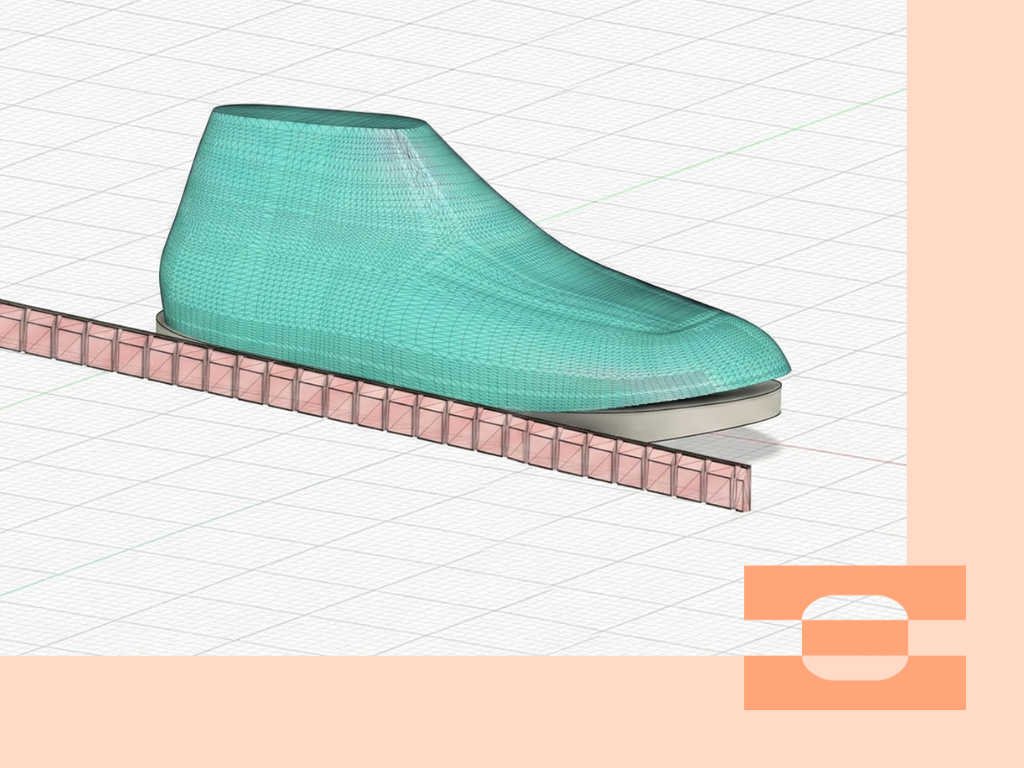
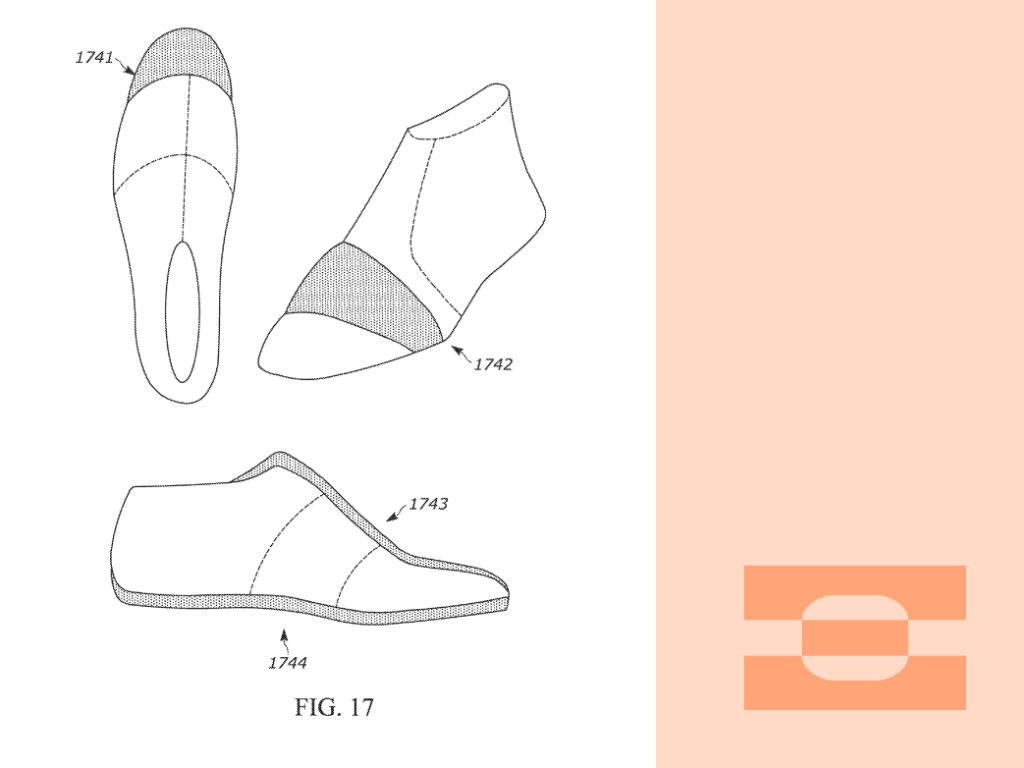
Almost no one fails the airport test for lack of spending. The executives who fail it own good shoes. Good shoes are built around a last, the foot-shaped form a manufacturer constructs the shoe on, and lasts are made for an average foot that very few people have.
Dr. Hylton Menz, senior research fellow at La Trobe University, has studied this for decades. “Most people have fairly unique foot shape,” he says. “A lot of the shoes you’ll find in the shoe stores are designed around a hypothetical average foot. If your foot doesn’t fit that average foot size or foot shape, you’re bound to have some problems with shoe fit.” His 2018 systematic review put it at roughly 60 to 70 percent of people wearing shoes wrong for the length or width of their feet.
Travel exposes this because travel is a stress test. A shoe that is slightly wrong can hide through an office day. Add swelling from the flight, three times the steps, harder floors and no chance to change, and slightly wrong becomes the thing you think about in every meeting.
What a shoe needs to pass
Three things, in this order.
Fit first, meaning the shoe follows the shape of your foot. The IAMBIC app pairs a smartphone scan with a fit questionnaire to capture more than 20 biometric variables, including volume, arch height and where pressure concentrates when you stand. IAMBIC turns them into a digital last for one person. How the fit is built is its own subject. For the airport test, what matters is that a shoe built to your foot has margin where you need it and hold where you need it, which is what survives a swollen foot at hour six.
Then material. Full-grain leather breathes through a long day indoors and holds its shape through a hundred of them; that is the case for leather in a performance shoe. The MODEL T uses Italian full-grain leather, made by hand in Portugal.
Then the sole. The MODEL T’s rubber outsole gives grip on tile and marble, structure on concrete, and enough give to walk a terminal in. It does the work at checkpoint four.
And it has to look like a dress shoe, because checkpoints three and five are about the room. That answer is on the MODEL T page.
People who travel in one pair
Elliott Charles wore a template pair of the MODEL T while his own pair was being built. After a few days in it, his plan for team travel was simple: “For any basketball trip I’m on, to only wear this one pair of shoes, because that makes sense.” His full story covers what a day of his looks like.
Elise Young leads a strategy and go-to-market operations team at Google and aims for 9,000 to 10,000 steps a day. Packing for a trip to Japan, the only question left was which IAMBICs to bring: “Do I bring both IAMBICs? Do I just bring the black ones?” Her review follows her through a full workday.
Run the test
Next trip, pack one pair and keep score at each checkpoint. Note where the shoe starts asking for attention and how much of the day it takes to get there.
If it fails, you know which checkpoint to solve for. If the reason is fit, and for roughly two out of three people it will be, the fix is a shoe built to your measurements.
See how the MODEL T is built for your foot
FAQs
What are the best professional shoes for all-day conferences?
A shoe that fits the actual shape of your foot, uses leather that breathes through long days indoors, and has a sole with enough structure to stay stable on carpet, tile and stairs. A shoe that passes on all three gets through a conference day without a change of footwear.
Can I wear one pair of shoes for an entire business trip?
Yes, if it passes the airport test: it fits after a long flight when feet have swelled, reads as appropriate in a boardroom and at dinner, and stays comfortable through 10,000 or more steps. Most people own several pairs because no single pair passes all five checkpoints.
Are dress shoes or sneakers better for business travel?
Each fails a different checkpoint. Dress shoes built on a standard last often pinch or slip by mid-afternoon. Sneakers stay comfortable and read as too casual in formal rooms. A dress-quality shoe built to your foot’s measurements removes the trade-off.
Why do my feet hurt more on travel days?
Travel days combine long sitting, which causes feet to swell, with more walking than a normal workday on hard surfaces. A shoe that fit at 7 a.m. is being asked to fit a larger foot by the afternoon, and any pressure point becomes a problem sooner.