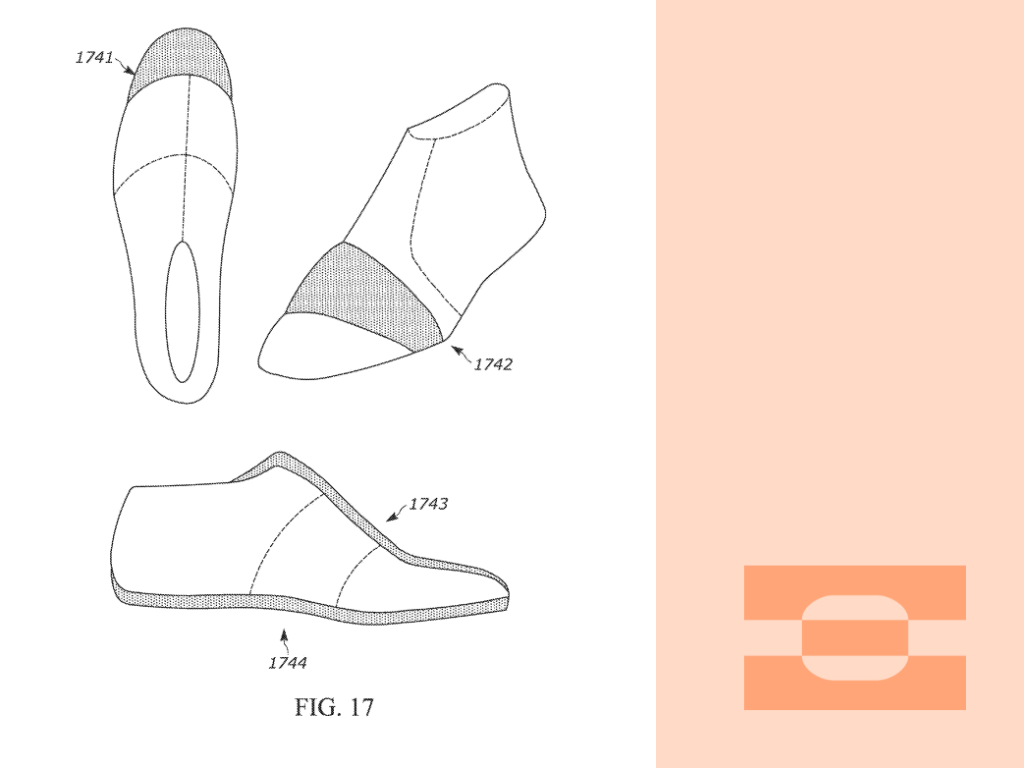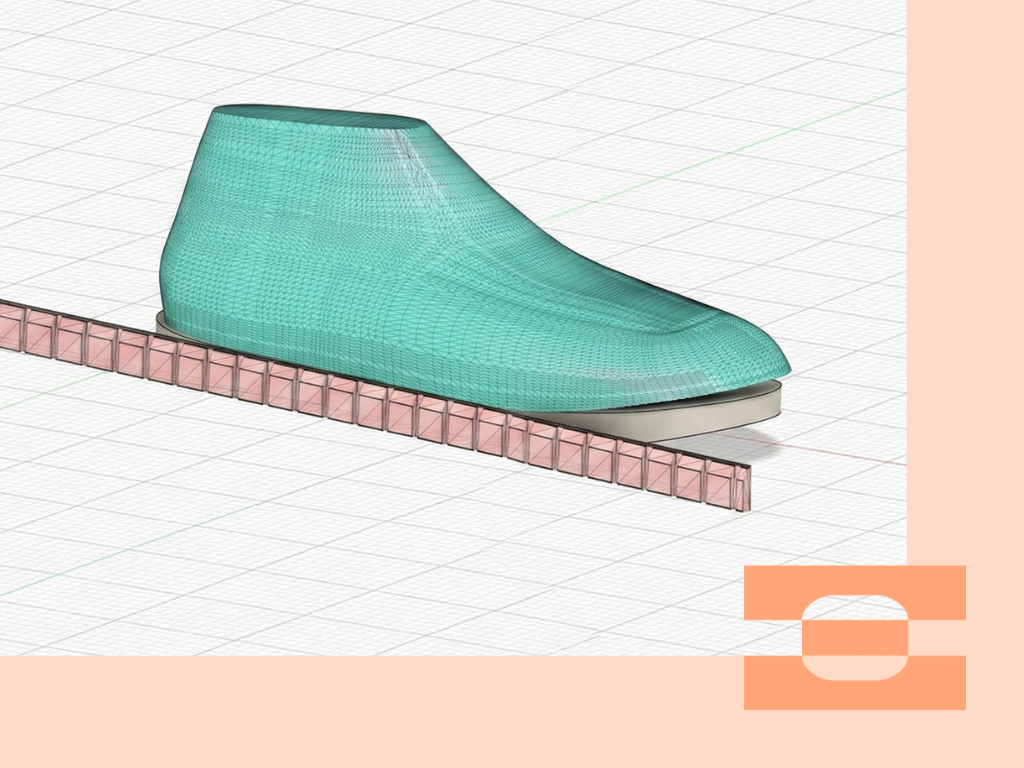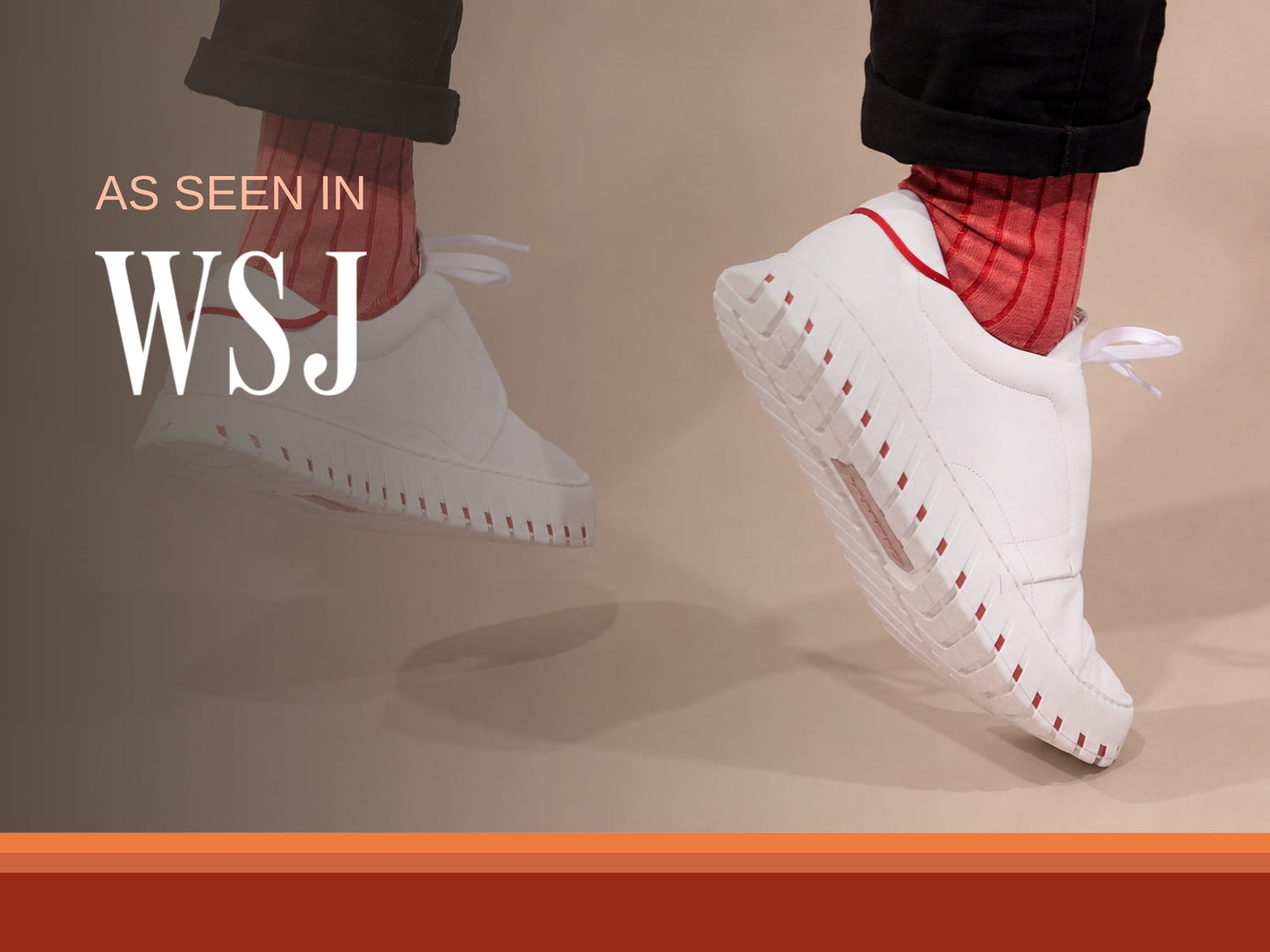
Precision-fit shoes remove the size step. There is no number to pick. You scan your feet with a smartphone and a last is generated from your own measurements. IAMBIC® builds every pair that way. A last is the foot-shaped form a shoe is built around, and it sets toe box volume, arch depth, width across the ball and how the heel is held. Every brand cuts its own, none are standardized against each other, and that is why two pairs marked the same size fit differently. In October 2023, The Wall Street Journal examined the brands replacing sizing with scan data and placed IAMBIC among them.
Key takeaways
- Precision-fit shoes are built on a last generated from your scan, so there is no size to select.
- IAMBIC reads 20 biometric variables from an advanced smartphone 3D scan and cuts a last for one person.
- A size number describes length. It says nothing about the other 19 measurements that decide whether a shoe works.
- Footwear and apparel accounted for 62.5% of returns in a 2023 survey of more than 2,000 Americans, with fit cited most.
- Your measurements move. Precision fit follows them, since your last is kept and improves pair over pair.
“The construction of a sneaker involves other factors, none of which are standardized.”
Ashley Mateo, The Wall Street Journal, October 6, 2023
How do precision-fit shoes remove the size step?
By building the form before it builds the shoe.
You complete a fit assessment covering where shoes hurt you, how much cushioning you want and how flexible the shoe should feel. Then you scan with advanced smartphone 3D scanning, and NASA-grade computer vision reads 20 biometric variables down to the millimeter.
IAMBIC's models compare those variables against more than 50,000 fit profiles the company collected itself, and a last is generated for you alone. Master shoemakers in Portugal handcraft the shoe on it in Italian full-grain leather. It costs $600 and arrives in 4 weeks.
Nothing in that process asks you to choose a number, because there is no number to choose. The measurement replaces it. The full method is on the IAMBIC technology page.

What does a last capture that a size cannot?
Almost everything that decides whether a shoe works on you.
Sizing standardizes one dimension. Length. Every other property of a shoe comes from the last, and each brand develops its own to its own house proportions. Two pairs stamped with the same number can differ across the arch, the heel seat and the toe box.
| Dimension | Captured by shoe size | Captured by IAMBIC |
|---|---|---|
| Length | Yes | Yes, to the millimeter |
| Width across the ball | Partial, by brand | Yes |
| Arch depth | No | Yes |
| Heel seat and hold | No | Yes |
| Toe box volume | No | Yes |
| Pressure distribution | No | Yes |
| How you spend a day | No | Yes, through the fit assessment |
The forms most manufacturers still work from were modeled decades ago on a narrow slice of the population, while the way people spend a day has changed. Somebody standing from morning to evening and then going out is asking one pair to do work no shared form was built for.
What does the fit gap cost?
Returns first, then the body.
The Wall Street Journal cited a 2023 Narvar survey of more than 2,000 Americans who had returned a product in the previous 6 months. Footwear and apparel accounted for 62.5% of those returns, and fit and size were the reasons given most often.
The physical cost showed up in the same reporting. Dr. Suzanne Fuchs, a Palm Beach podiatrist specializing in sports medicine, told the paper that poorly fitted shoes either restrict natural movement or allow too much of it, and she named plantar fasciitis, Achilles tendinitis, shin splints and stress fractures among the results.
IAMBIC is not a medical device and does not diagnose or treat any condition.
How does precision fit handle feet that change?
By keeping your last and improving it, which a size chart cannot do.
Width can rise 4 mm per decade. Structural change can move another 8 mm, and pregnancy can change width by as much as 24 mm. A number that worked at 30 can be wrong at 45 while still reading correct on the box.
Your digital last stays on file, so a second pair needs no new measurement, and adjustments carry forward. Wear feeds back too. The tread on your soles develops into a Sole Print™, and that pattern improves the next last.
So the second pair is built from your measurements and from evidence of how you actually walked in the first. Over a full ownership cycle that changes what a pair costs over time.
What the coverage got right
Mateo located the problem in manufacturing. Most coverage puts it on the shopper.
The usual advice is to measure your feet at the end of the day and size up half a step. Hers explained why those tactics only go so far: the variation is built into how the industry makes shoes, and no amount of careful shopping standardizes a last.
She also treated scan-based fit as an emerging category and put several approaches side by side so a reader could see the trade-offs. That framing is why the piece still reads accurately 3 years on.
What has changed since the article
The Wall Street Journal published this article on October 6, 2023. A pair is $600 today, handcrafted in Portugal and delivered in 4 weeks. They are HSA/FSA eligible. IAMBIC's fit dataset has since grown past 50,000 scans. Ordering questions are covered in the IAMBIC FAQs.
Who wrote this article
Ashley Mateo
Ashley Mateo is a journalist covering running, fitness and health technology. Her work appears in The Wall Street Journal, TIME, Runner's World and Women's Health. Her article on customizable footwear ran on October 6, 2023.
The Wall Street Journal
The Wall Street Journal is a daily newspaper covering business, finance, technology and consumer affairs, published by Dow Jones & Company since 1889.
Frequently asked questions
Do custom-fit shoes actually work?
They remove the variable that causes most fit failure. A shared last approximates your foot; a last generated from your scan does not have to. The Wall Street Journal covered the category in 2023 and placed IAMBIC among the brands replacing standard sizing with scan data.
Why does the same size fit differently in different brands?
Because each brand develops lasts to its own house proportions. A size 10 describes a length that both brands agree on and a shape that neither has agreed on. This is the structural point The Wall Street Journal made in its reporting on customizable footwear.
Can badly fitting shoes cause foot problems?
A podiatrist told The Wall Street Journal that poorly fitted shoes either restrict natural movement or allow too much of it, naming plantar fasciitis, Achilles tendinitis, shin splints and stress fractures. IAMBIC does not diagnose or treat any condition. The difference precision fit makes is structural, since the shape is correct from the start.
What is the difference between custom-fit and made-to-order shoes?
Made to order means nothing is cut before you buy. Custom-fit means the form itself is built for you. IAMBIC does both: your last is generated from your measurements, then the pair is handcrafted against it in Portugal after you order.
Do feet change shape over time?
Yes, and more than most people expect. Width can rise roughly 4 mm per decade, structural change can move another 8 mm, and pregnancy can change width by as much as 24 mm. Precision fit follows that, since your last is kept and improves pair over pair.
Are custom-fit shoes worth it compared with buying the right size?
There is no right size to buy when the shape underneath the number varies by brand. IAMBIC precision-fit shoes are $600, handcrafted to order in Portugal, delivered in 4 weeks and HSA/FSA eligible, with unlimited refits under the Signature Fit Guarantee.
Sources
- Segal NA, Boyer ER, Teran-Yengle P, Glass NA, Hillstrom HJ, Yack HJ. Pregnancy leads to lasting changes in foot structure. American Journal of Physical Medicine & Rehabilitation. 2013;92(3):232-240.
- Chiou WK, Chiu HT, Chao AS, et al. The influence of body mass on foot dimensions during pregnancy. Applied Ergonomics. 2015;46:212-217.
- Buldt AK, Menz HB. Incorrectly fitted footwear, foot pain and foot disorders: a systematic search and narrative review of the literature. Journal of Foot and Ankle Research. 2018;11:43.
- Narvar. Consumer Report: The State of Returns. 2023. Cited by The Wall Street Journal.
Full fit research and the foot measurement table are on the foot measurement research page.
Related IAMBIC coverage
- Athletech News on the $600 question
- TIME on the Best Invention award
- Shape on the fitting process
See what a last built from your own measurements feels like
HSA/FSA eligible. Unlimited refits included.