Getting fitted for precision-fit shoes takes 10 to 15 minutes and happens on your own phone, once. IAMBIC® runs the whole fitting that way. You photograph each foot 3 times on a sheet of printer paper, answer a comfort assessment about where shoes hurt you and how you want the shoe to feel, and that is your part finished. Advanced smartphone 3D scanning reads 20 biometric variables from those images to the millimeter. Everything after it runs without you. In April 2024, Shape senior writer Jennifer Heimlich went through the process herself and documented every stage, from the first photograph to the pair that arrived. She is a certified running coach, so she knew what to look for.
Key takeaways
- The whole fitting is 10 to 15 minutes on your own phone. No appointment, no store visit, no equipment.
- You need one sheet of printer paper and somewhere flat to stand. That is the entire kit.
- The comfort assessment matters as much as the scan, since it captures what a photograph cannot.
- A Shape senior writer and certified running coach documented the process end to end in April 2024.
- Your scan is kept, so a second pair needs no new measurement.
Shape described the inputs: The last is built from “smartphone camera scans of your feet, a detailed comfort questionnaire” and the wear pattern from your previous pair. Read the full feature at Shape.
Do you have to go anywhere to get fitted?
No. The whole thing happens where you are.
Traditional bespoke footwear requires a fitting appointment, a skilled maker and a physical measurement session, usually more than one. That requirement is most of the reason custom shoes have historically cost thousands and taken months.
IAMBIC moved the measurement to a smartphone. You order first, then receive a link to the IAMBIC app and complete the fitting at home, at a desk, in a hotel room, wherever you happen to be. There is a Virtual Consultation guide if you want to see the steps before you start.

What do you actually need for the scan?
A phone, a sheet of printer paper and a flat floor.
The paper is doing real work. It is a known size, so the software has a reference against which to calculate everything else. Without it a photograph tells you the shape of a foot and nothing about how large it is.
| Stage | Your time | What it captures |
|---|---|---|
| Photograph each foot | About 5 minutes | Geometry, to the millimeter |
| Comfort assessment | About 5 minutes | Pain points, cushioning and flex preference |
| Lifestyle questions | 2 to 3 minutes | Hours standing, surfaces, typical day |
| Review and submit | 1 minute | Your confirmation |
| Everything after | None | Handled by the fit team |
3 photographs per foot sounds thin for a measurement that claims millimeter precision. It works because computer vision reads far more from a controlled image than a tape measure reads from a foot, and because the scan is checked against a dataset of more than 50,000 fit profiles before anything is cut. The engineering behind that sits on the IAMBIC fit technology page.
Why does the questionnaire matter as much as the scan?
Because geometry tells you the shape of a foot, and it tells you nothing about the day that foot has.
Two people can scan almost identically and need different shoes. One stands on concrete for 9 hours and wants more under the forefoot. The other walks 20,000 steps across soft floors and wants the heel locked. The photographs cannot separate them.
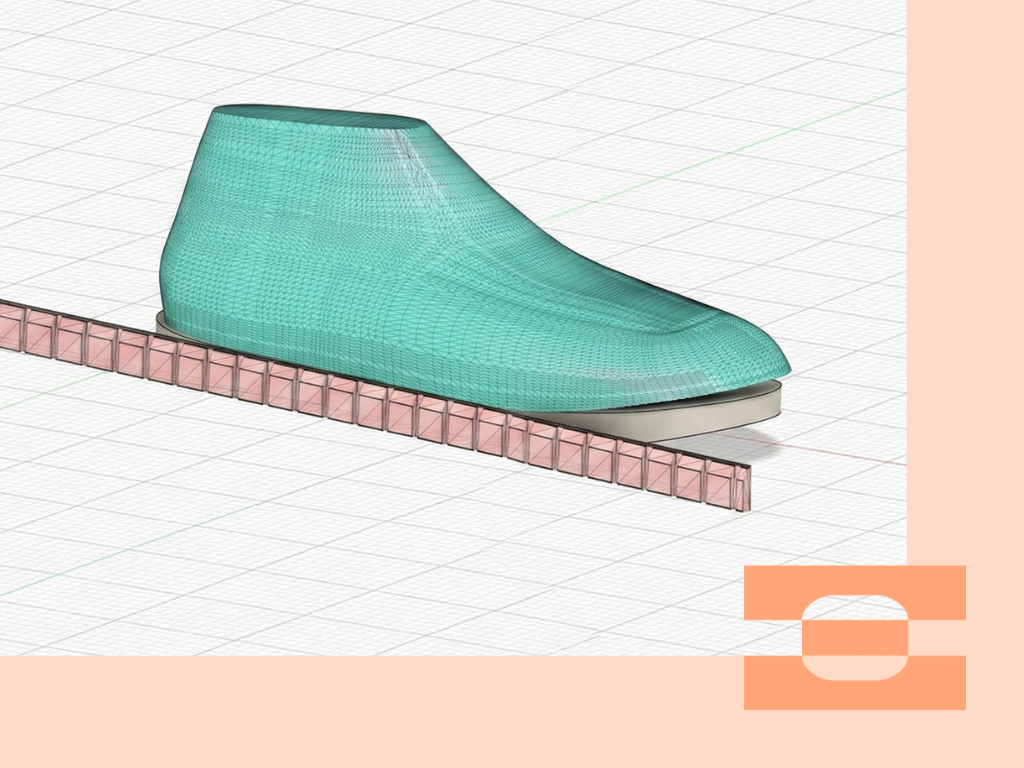
The comfort assessment covers where shoes have hurt you before, how much cushioning you want, how flexible the shoe should feel, and how you spend a working day. Those answers sit alongside your 20 biometric variables when the last is generated. A size number captures none of it, which is the case for custom-fit shoes.
IAMBIC is not a medical device and does not diagnose or treat any condition.
What happens to your scan afterwards?
It stays on file, and it improves.
Your digital last is kept, so a second pair needs no new measurement. Adjustments carry forward too. If you asked for more toe room the first time, that preference travels with your file and applies automatically.
Wear then feeds back in. The tread on your soles develops into a Sole Print™, a record of how you actually move, and photographs of that pattern improve the next last. The first pair is built from measurements. The second is built from measurements plus evidence.
What the coverage got right
Heimlich did the thing that makes a process piece worth reading. She went through it herself, at her own pace, and reported the stages in order. Most process coverage summarises a press description.
She also came to it as a certified running coach, which meant she knew which parts of a fitting usually go wrong and where a shortcut would show. Reporting that the questionnaire carried real weight alongside the scan is the observation a less-informed writer would have skipped.
What has changed since the feature
Shape published this feature on April 22, 2024. A pair is $600 today, handcrafted in Portugal by master shoemakers and delivered in 4 weeks, and IAMBIC shoes are HSA/FSA eligible. The fit dataset behind the scan has since grown past 50,000 profiles.
Who wrote this feature
Jennifer Heimlich
Jennifer Heimlich is a senior writer at Shape, a certified running coach and a lifelong athlete. She covers performance, health and recovery with a focus on footwear. Her feature on the IAMBIC fitting ran on April 22, 2024.
Shape
Shape is a health and fitness publication founded in 1981, covering training, nutrition, wellness and the products people use to move.
Frequently asked questions
Do I need to visit a store to be fitted?
No. The fitting happens entirely on your own phone, wherever you are. You order first, then receive a link to the IAMBIC app and complete the scan and comfort assessment at home. No appointment and no store visit are involved at any point.
What equipment do I need for the fitting?
A smartphone, one sheet of standard printer paper and a flat floor. The paper is a known size, so it gives the software a reference scale. Without it a photograph would show the shape of a foot but not how large that foot is.
What does the comfort assessment ask about?
Where shoes have hurt you before, how much cushioning you want, how flexible the shoe should feel, and how you spend a working day. Those answers sit alongside the scan data, since two people with near-identical geometry can still need different shoes.
What if my two feet are different sizes?
Each foot is scanned separately and each gets its own last. Most people have some difference between left and right, and a size chart forces you to pick one number for both, so one foot is always compromised. Precision fit removes that trade-off, since the two lasts are cut independently from your own measurements.
Can someone else help me take the photographs?
Yes, and many people find it easier. The app guides each shot with on-screen positioning, so a second person only needs to hold the phone steady while you stand on the paper. The whole capture takes about 5 minutes either way, and the guidance is the same whether you shoot it yourself or somebody helps.
Do I have to scan again for a second pair?
No. Your digital last stays on file, so a repeat order needs no new measurement and no new appointment. Any adjustments you asked for carry forward automatically. Wear data from your first pair improves the last before the second is built, so the second pair starts from a better position than the first.
Related IAMBIC coverage
- TIME on the Best Invention award
- Forbes on how a pair is made
- Athletech News on the $600 question
See what a last built from your own measurements feels like
HSA/FSA eligible. Unlimited refits included.