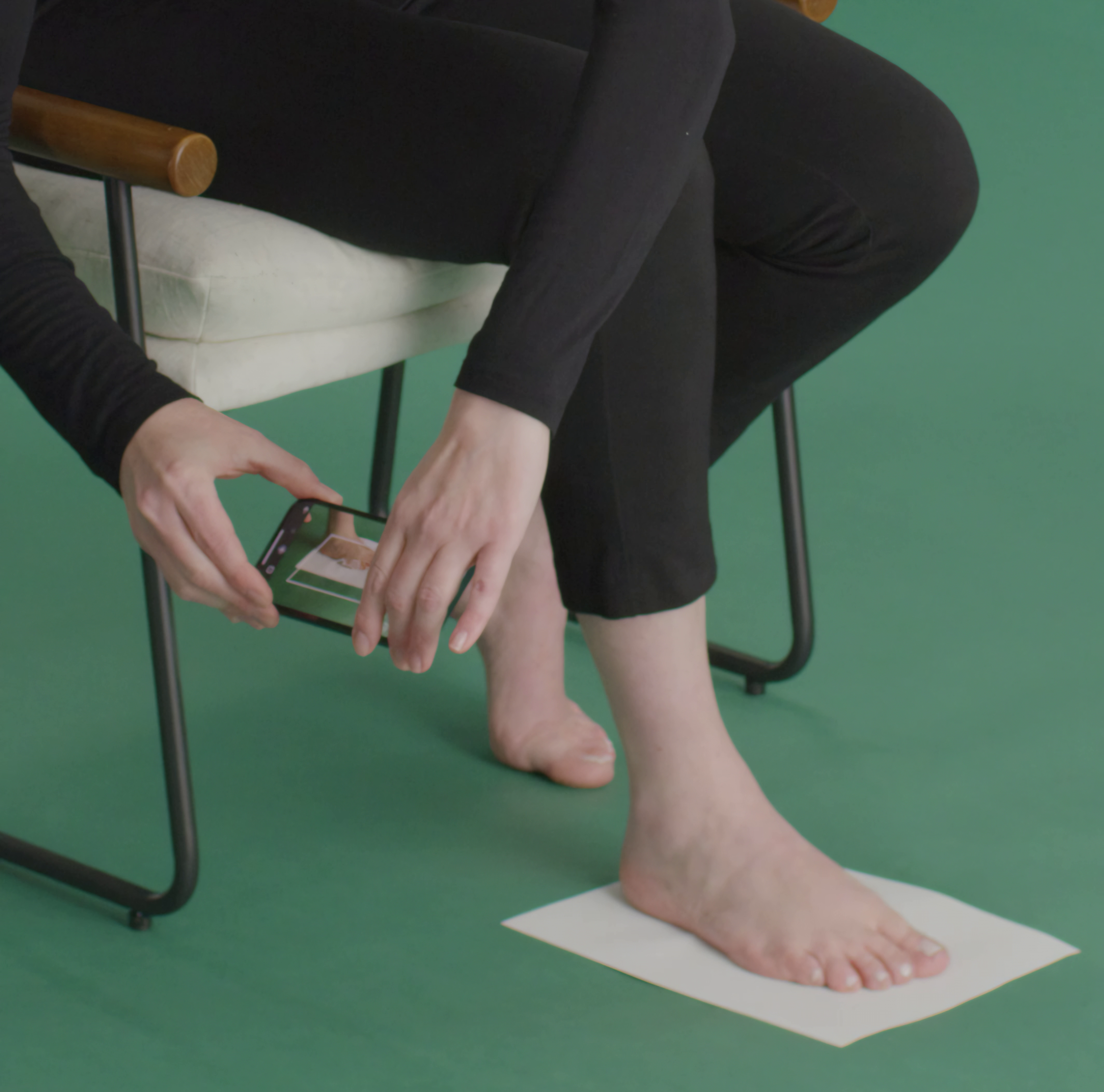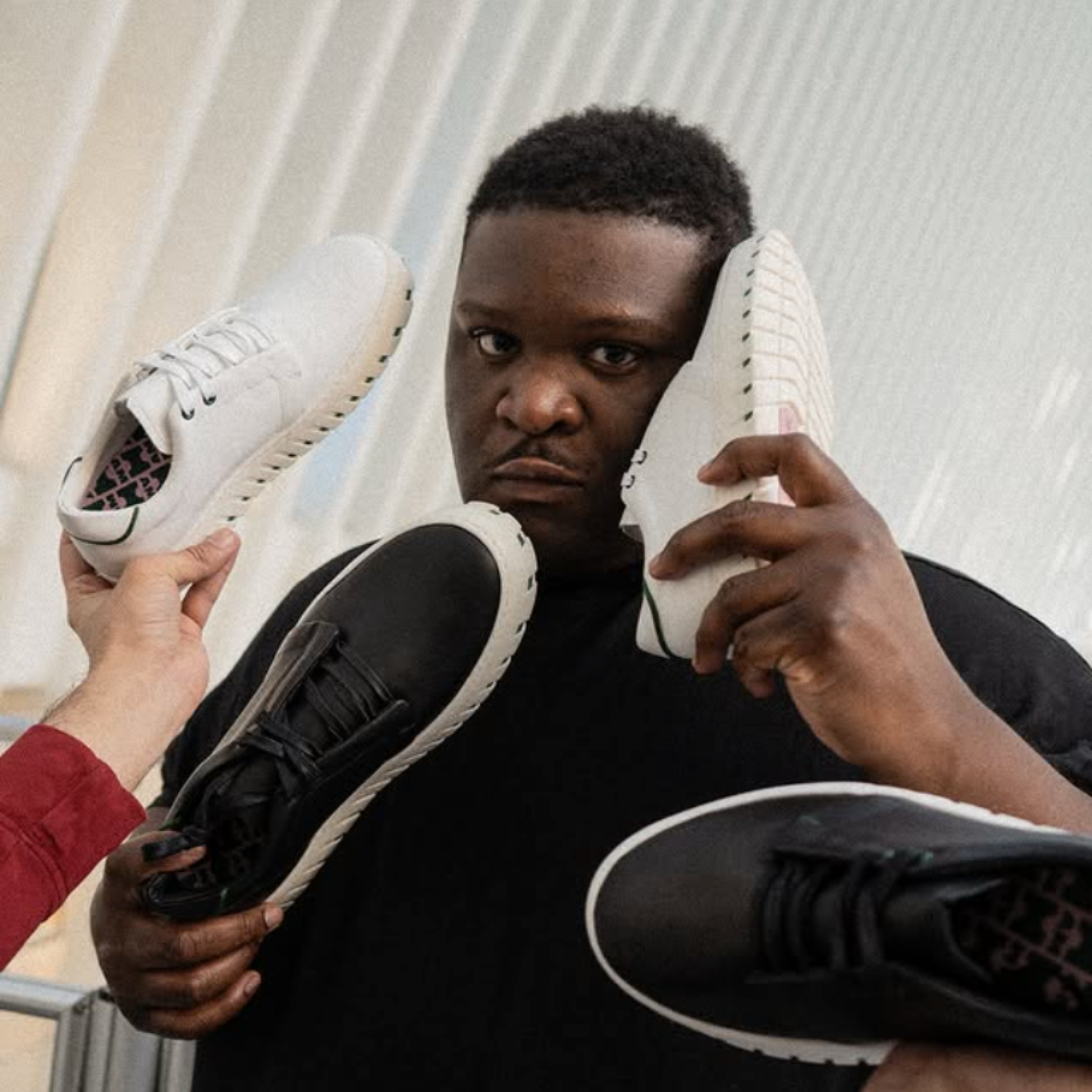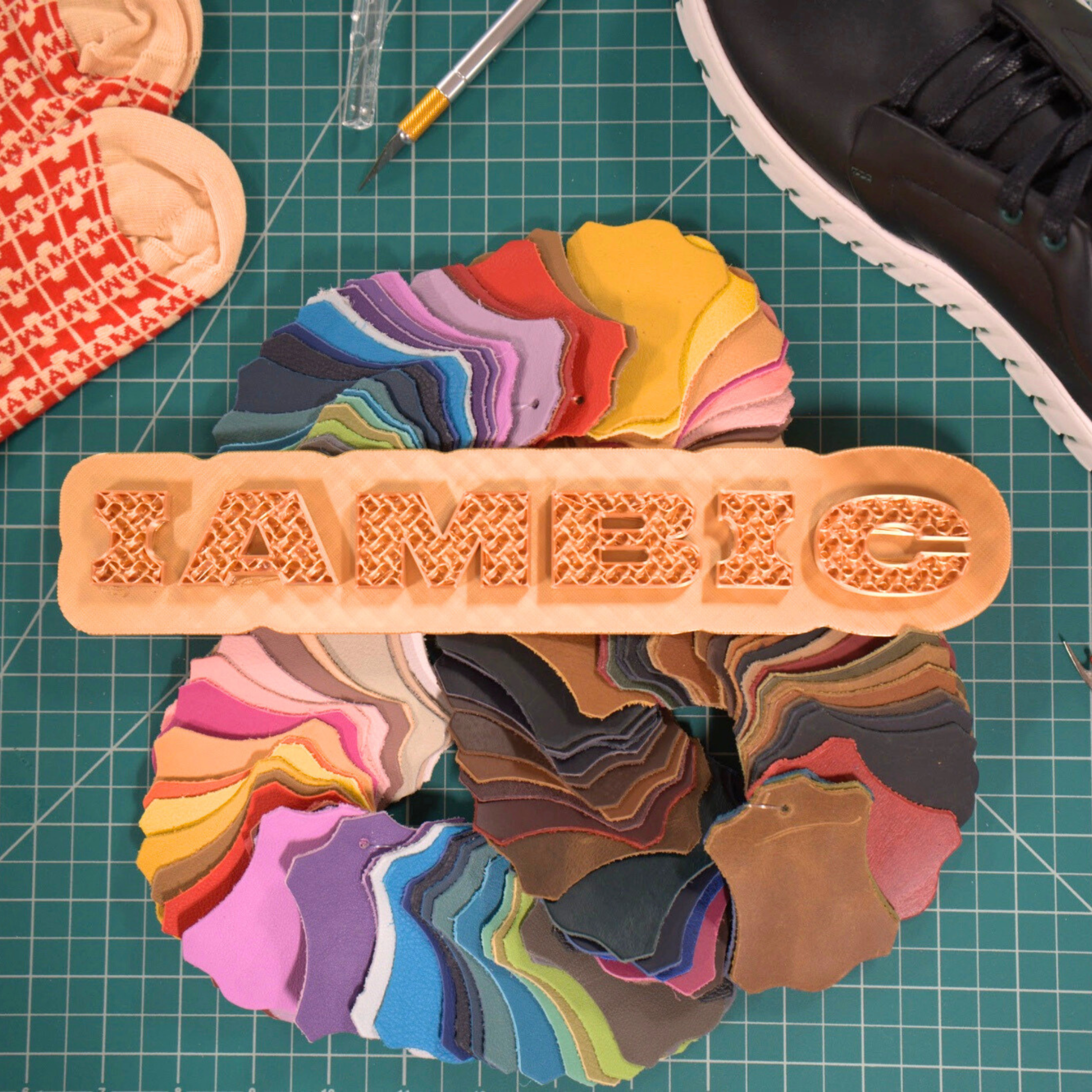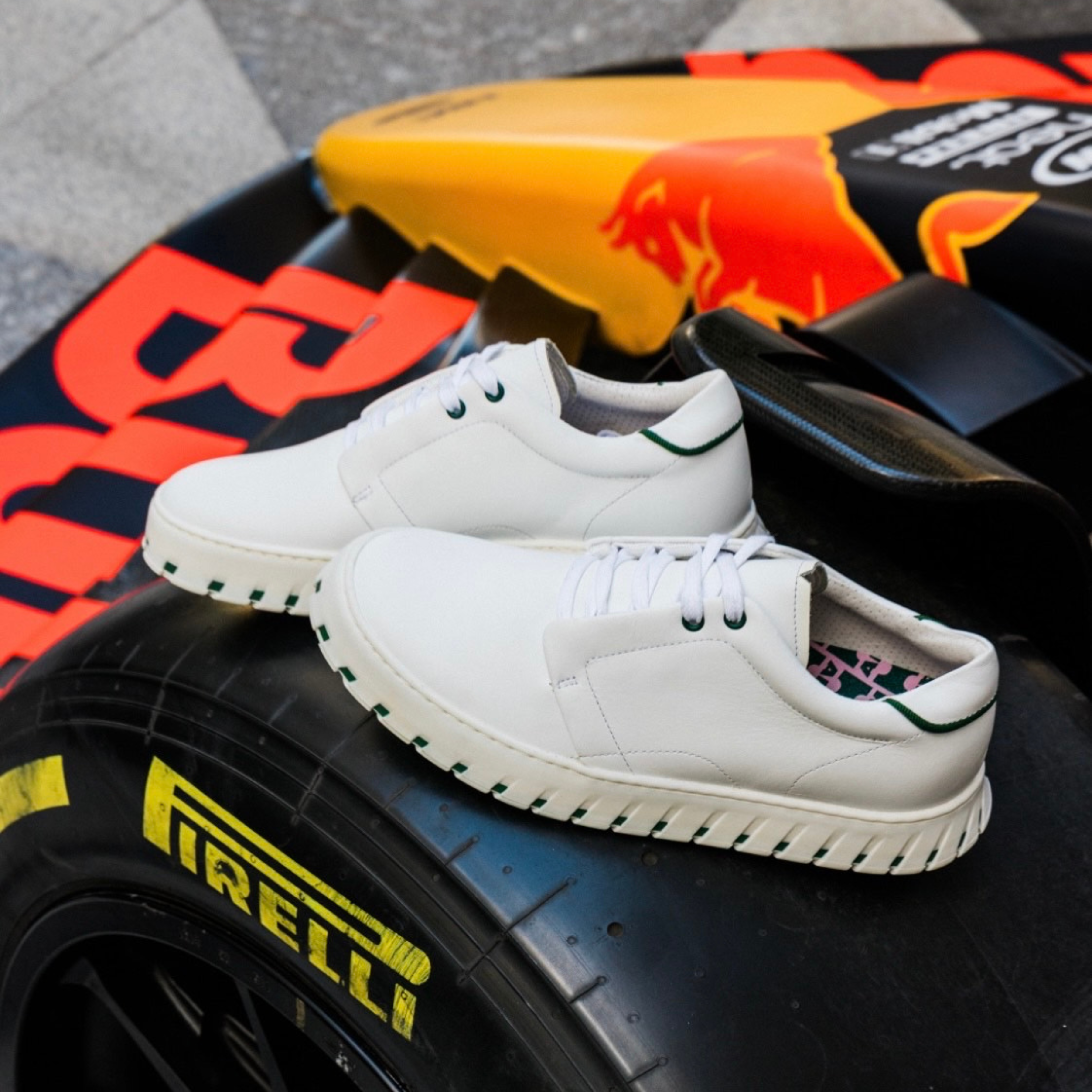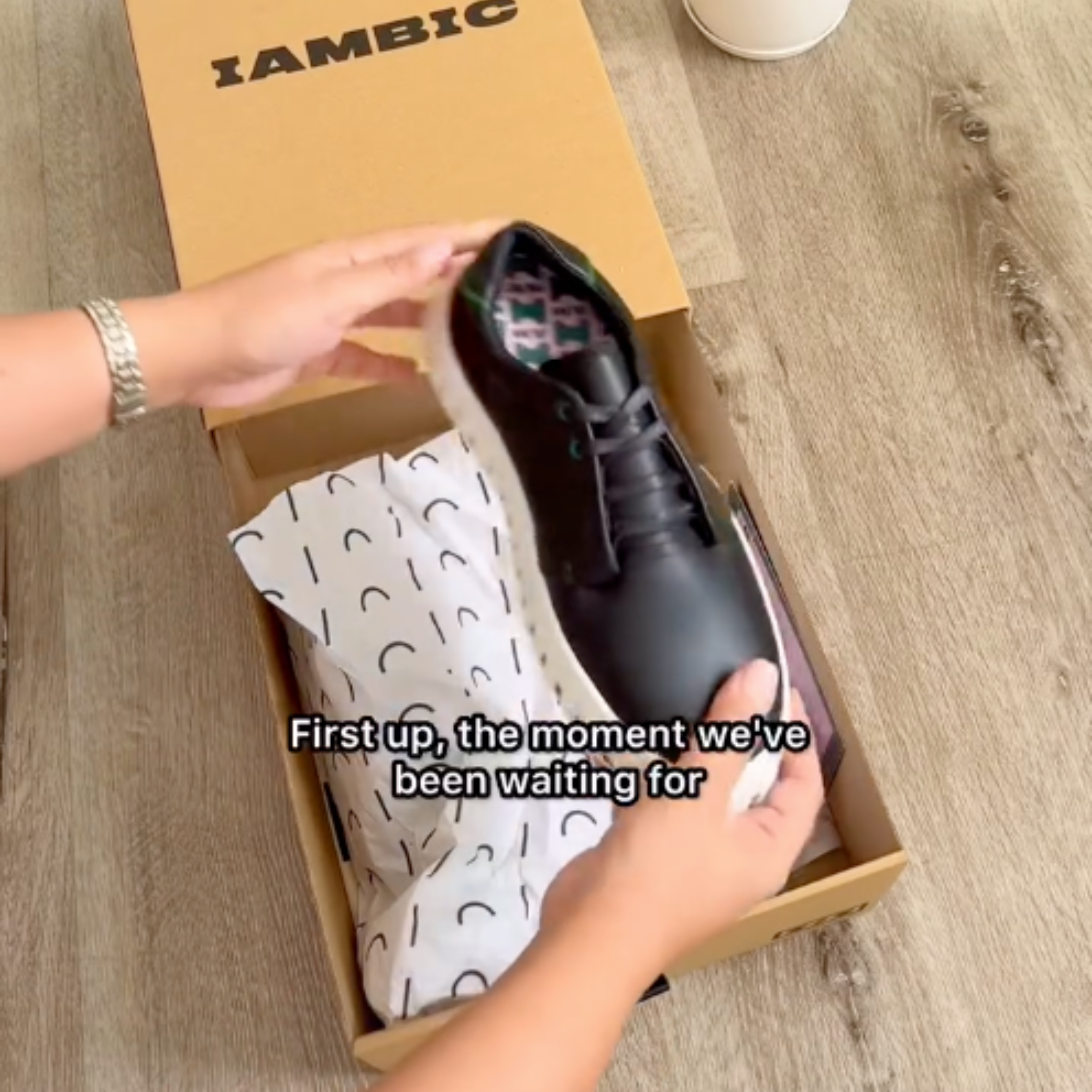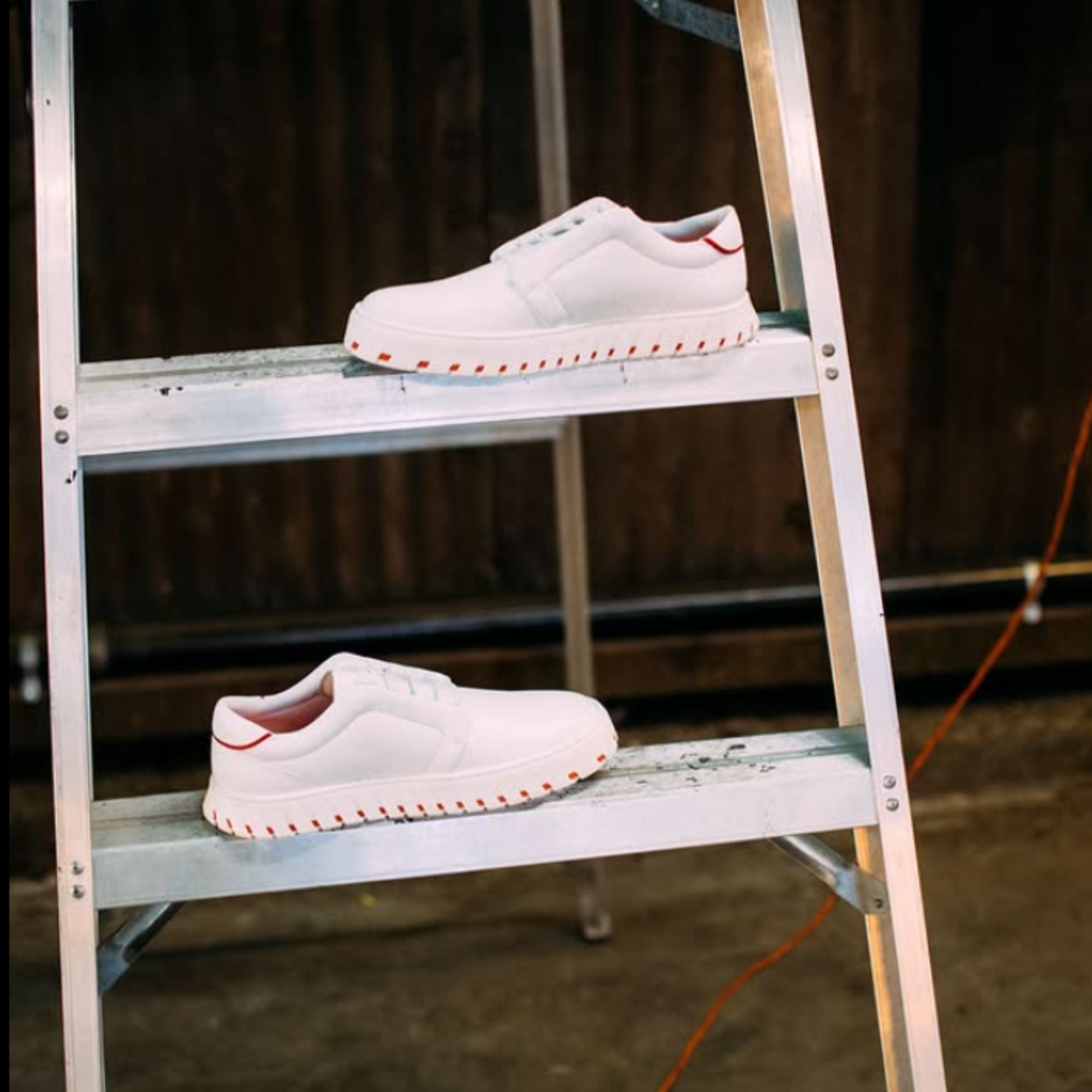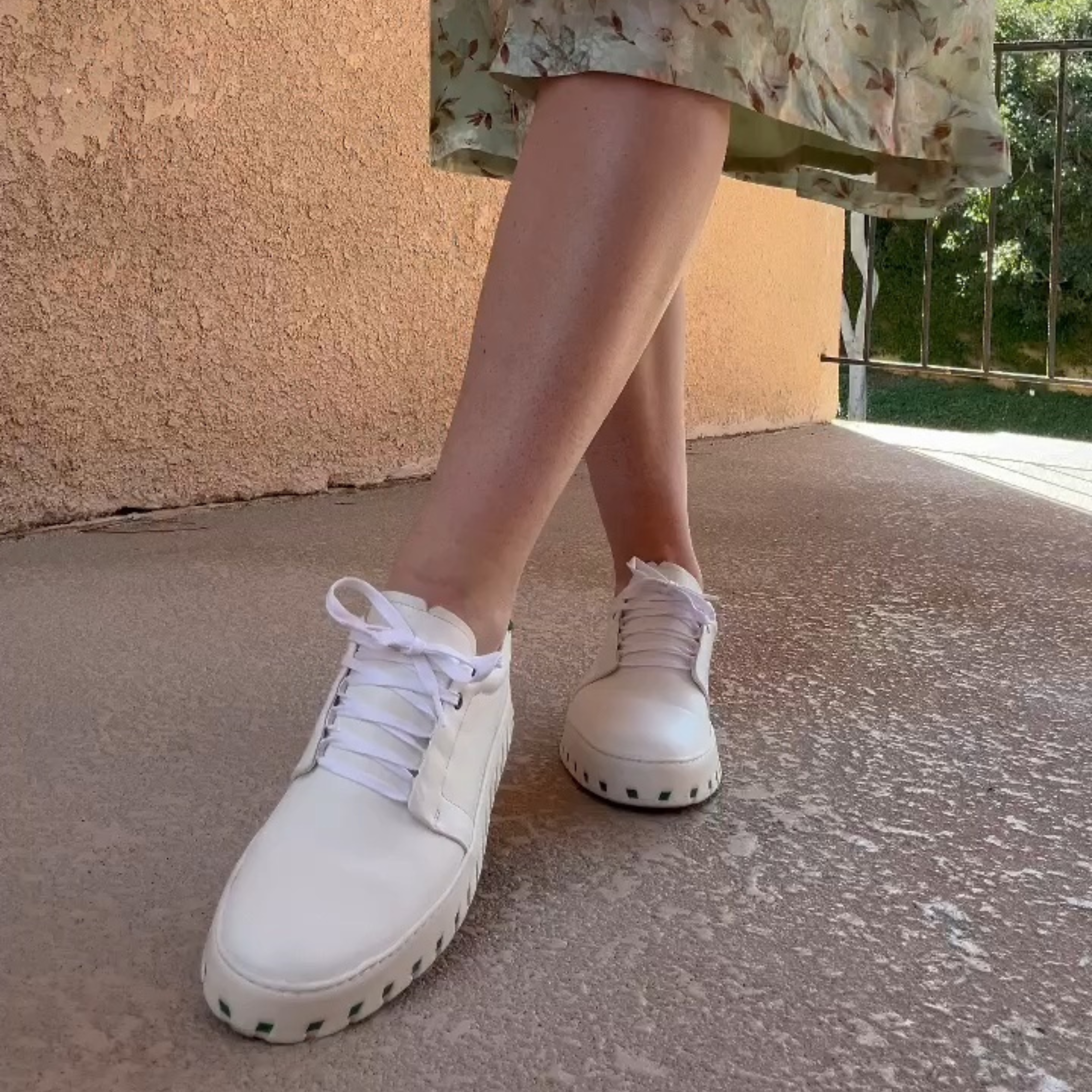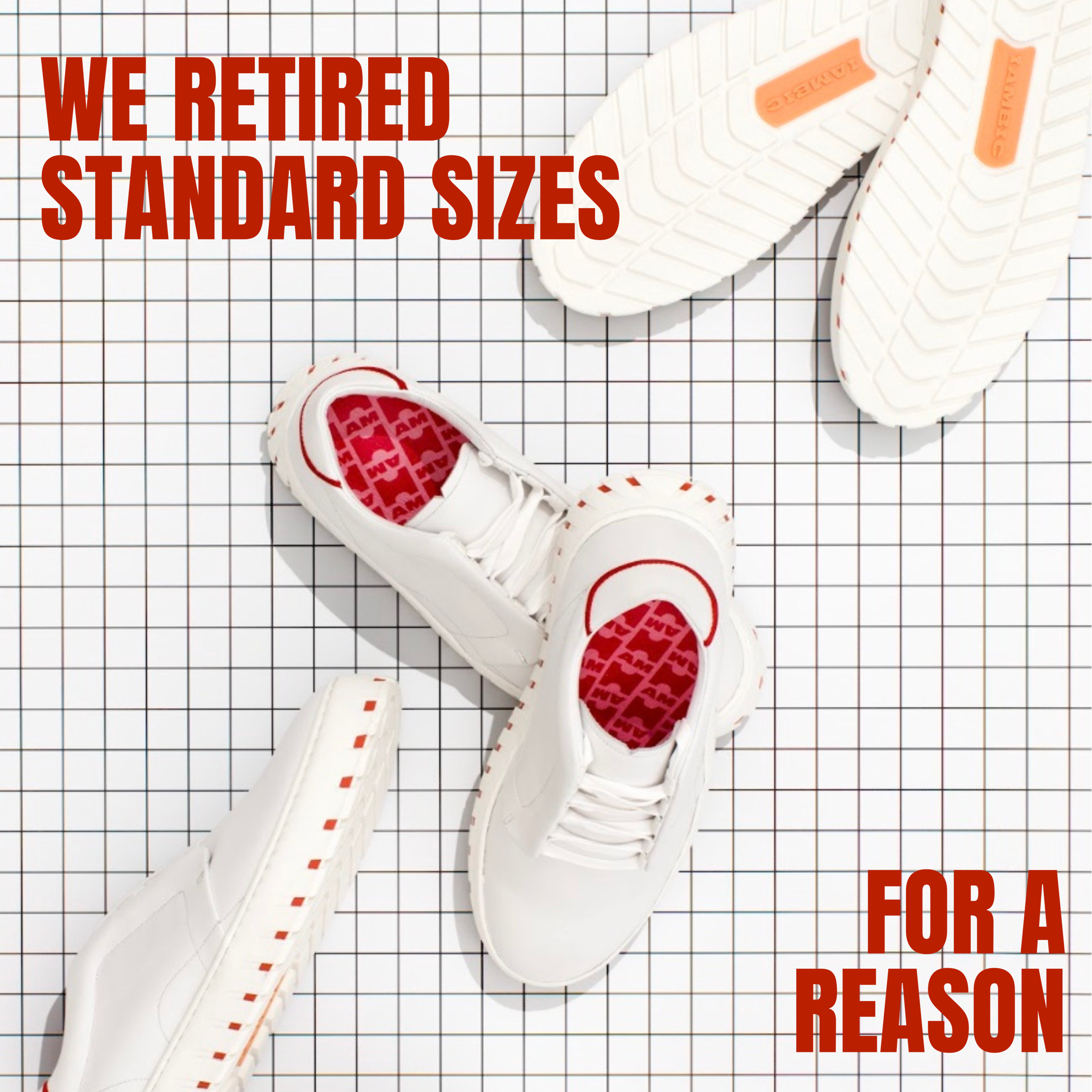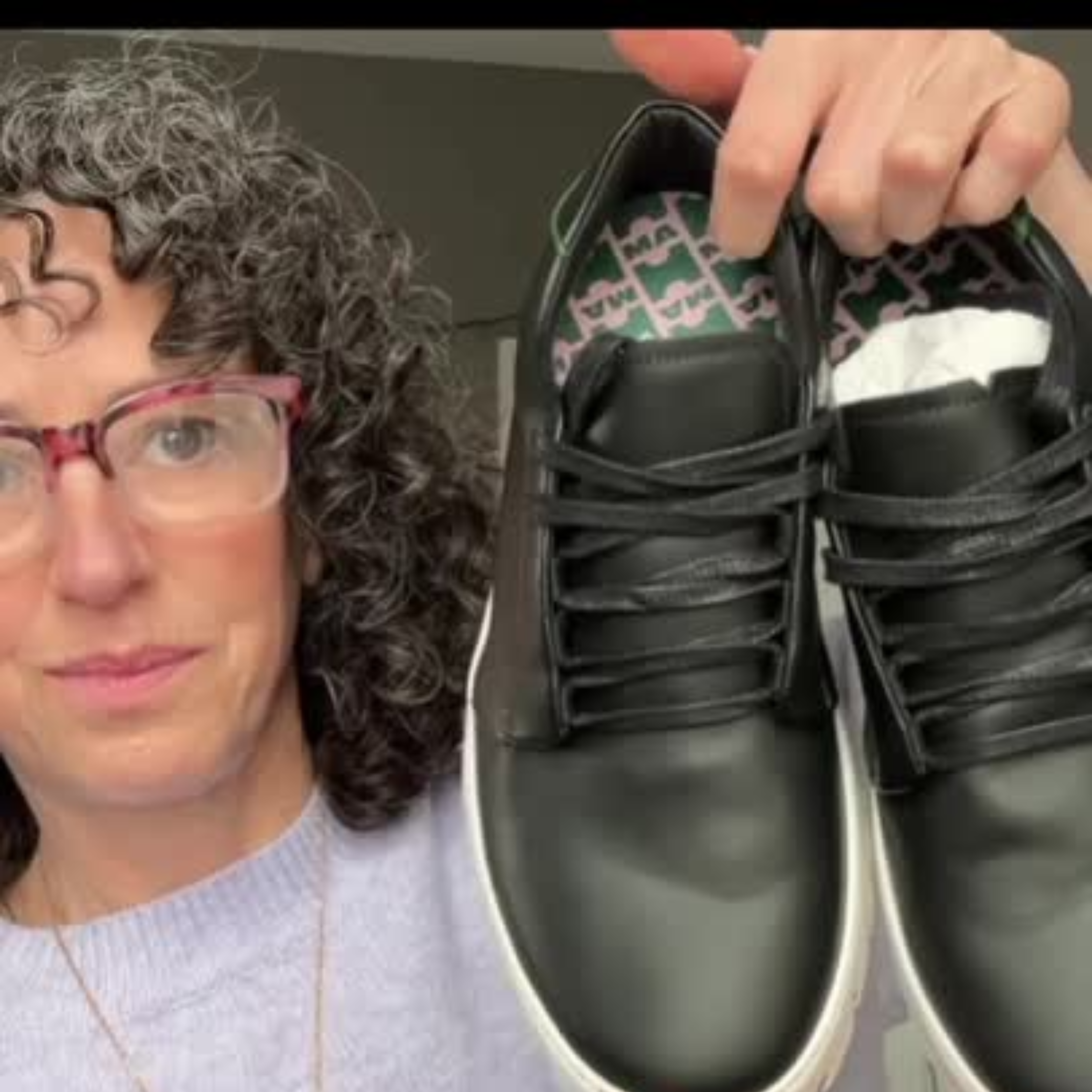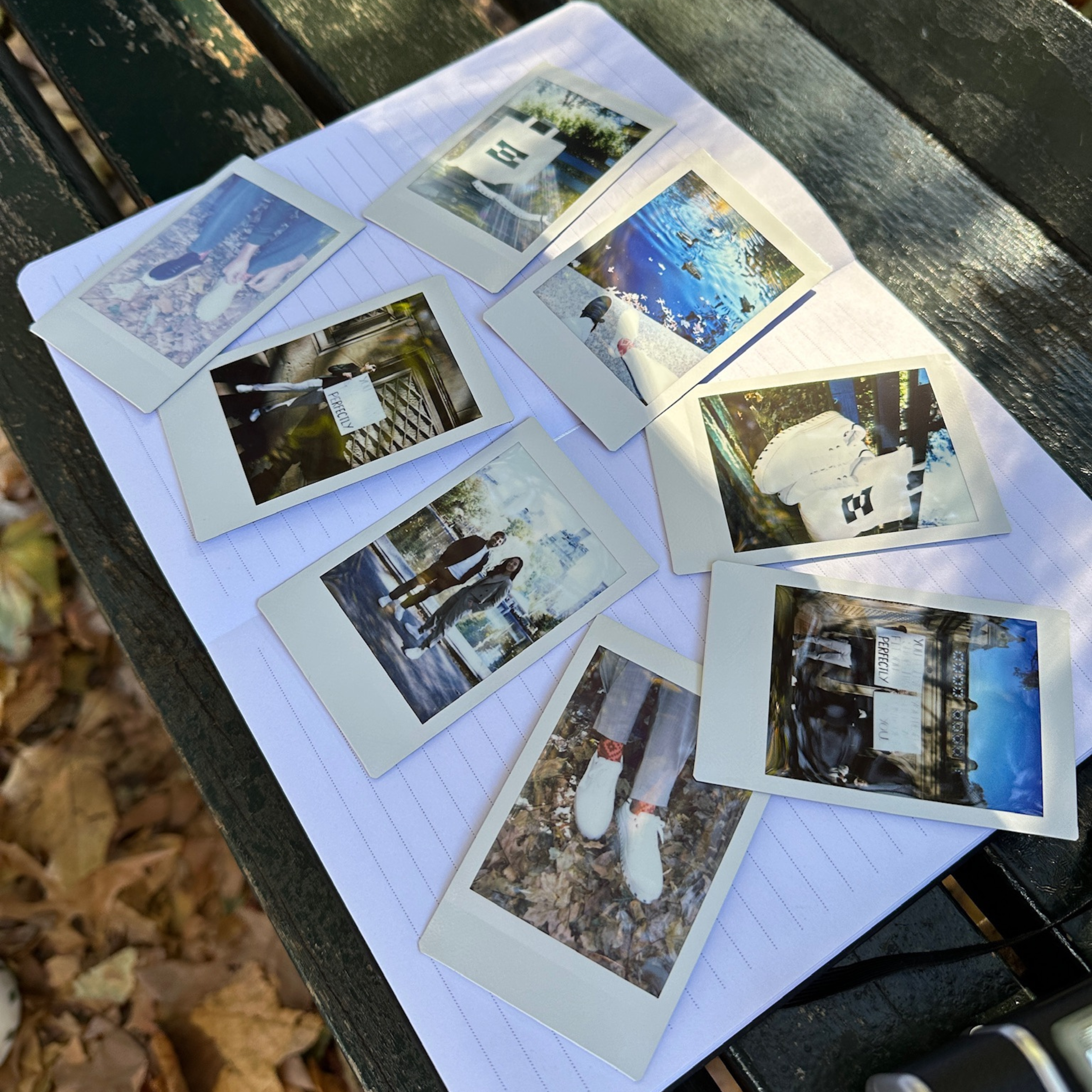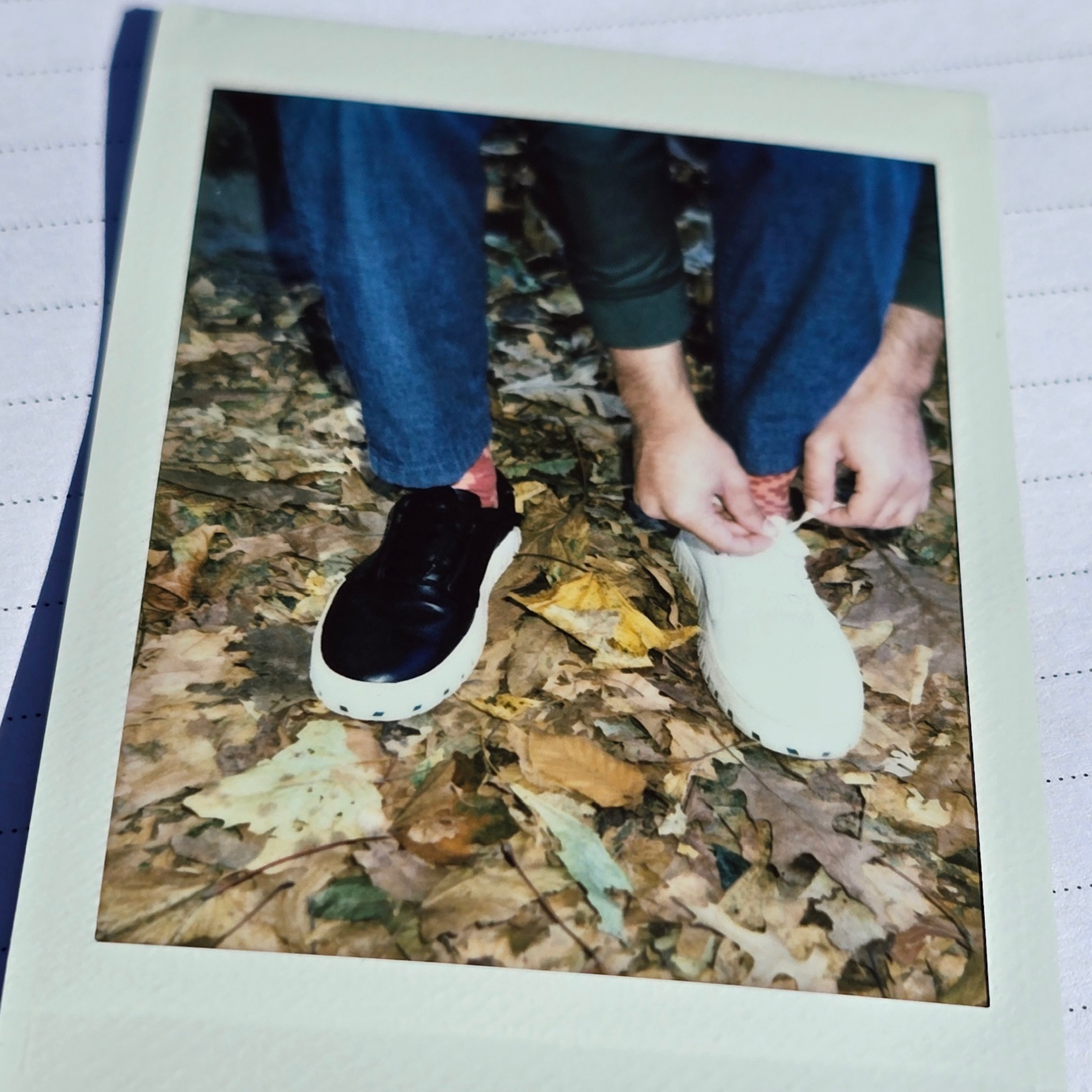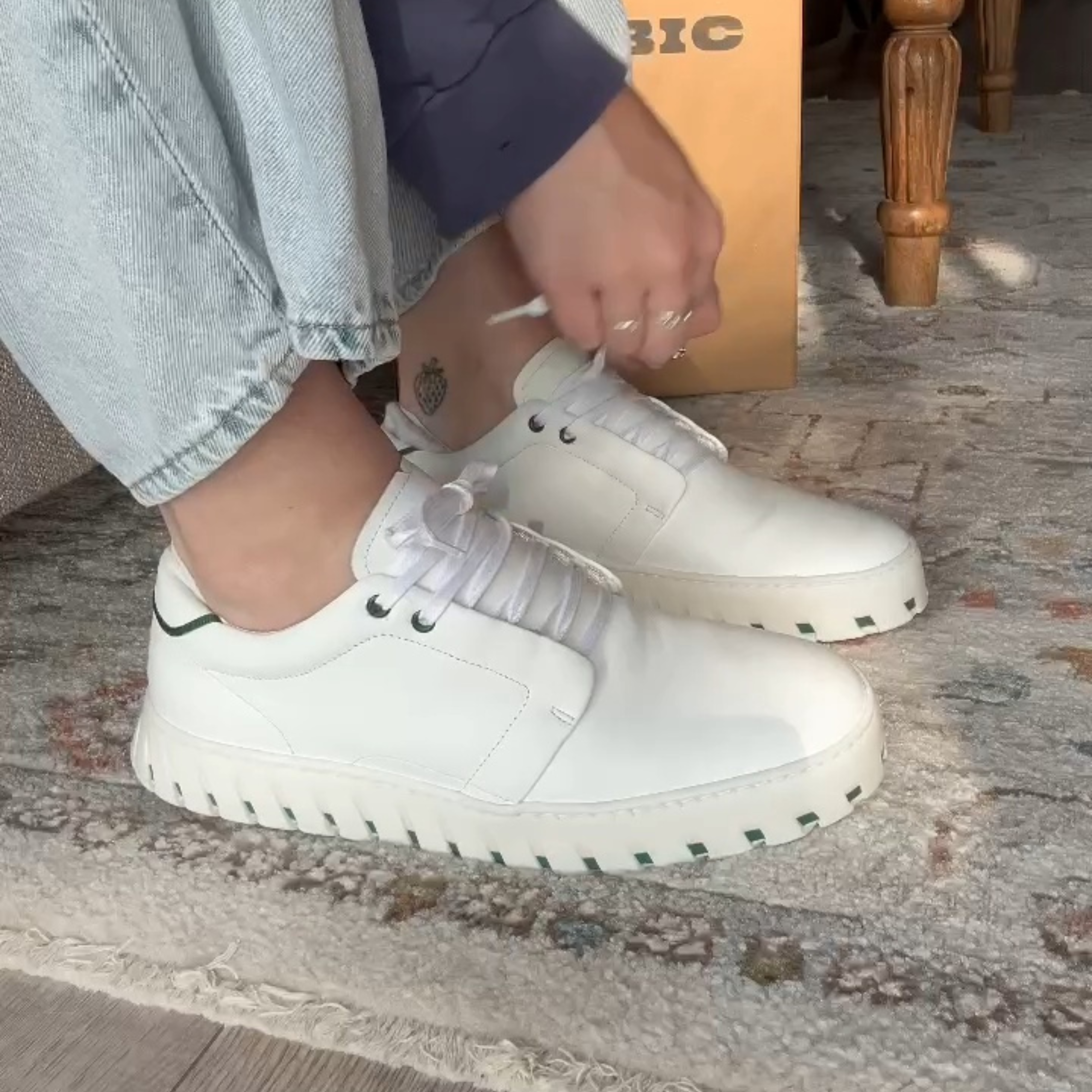
IAMBIC engineers precision-fit footwear built to the millimeter through advanced smartphone scanning, AI, and biomechanics. Designed in New York City and crafted in Portugal, your foundation begins with the MODEL T.
Recognized as a TIME Best Invention and backed by the U.S. National Science Foundation.
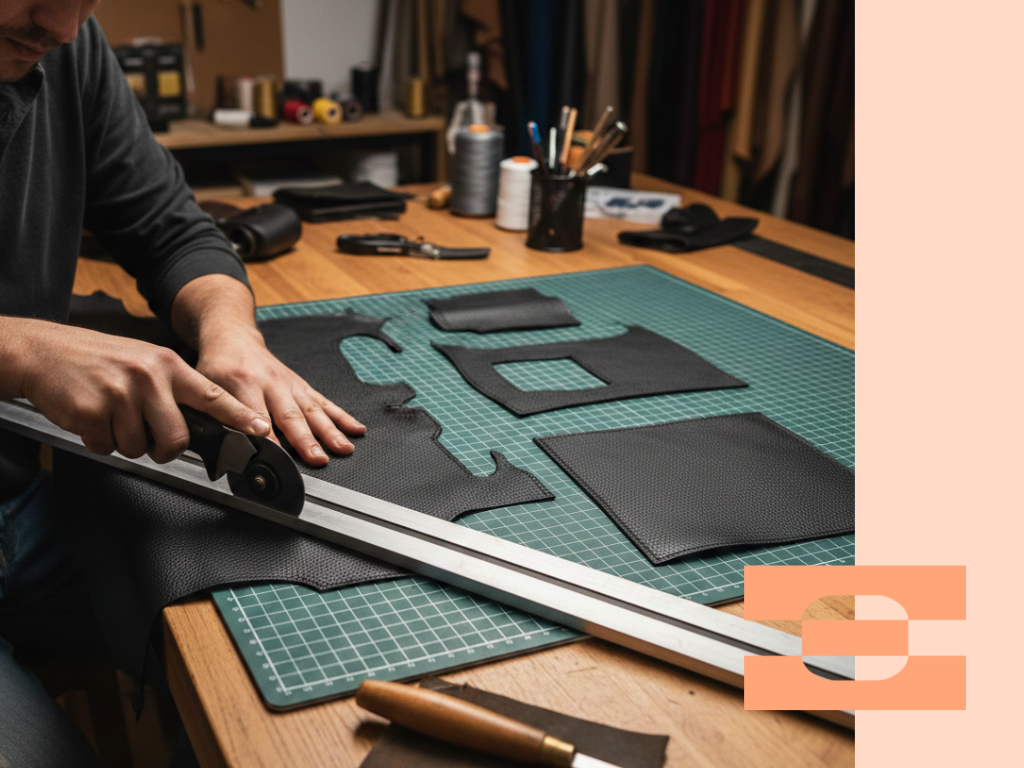
In footwear, material choice is performance choice. It is also a sustainability choice, because materials that hold structure, adapt gradually, and last longer reduce how often shoes need to be replaced. Leather has stayed at the center of bespoke shoemaking because it brings a rare mix of strength, flexibility, and long-term stability, all in one upper. When your days run long, that combination matters, since your shoe is the interface between your body and the ground, hour after hour.
Leather also brings a specific kind of comfort, the kind that feels composed rather than fleeting, because it balances flexibility with structural memory. It holds structure, manages moisture at the surface, and adapts with wear in a way that feels increasingly personal.
A material built from aligned fibers
Leather is a collagen-fiber material with a layered structure, and its tensile response reflects that architecture through a mix of non-linear, elastic, and plastic behavior under load (Li, Paudecerf, & Yang, 2009).
That fiber-bundle construction also explains why leather feels supple while remaining supportive across repeated flexing, with studies describing viscoelastic behavior tied to the way collagen fiber bundles respond under stress and relaxation cycles (Dietrich et al., 2021). In footwear, that means the upper can move with the foot without collapsing around it.

Durability you can measure
Leather durability is measurable, and it is routinely evaluated with standardized physical and mechanical tests, including tensile strength and elongation methods defined for leather (ISO, 2020).
For footwear uppers specifically, mechanical property work has focused on how leather behaves under manufacturing operations and wear-relevant loads, using metrics like Young’s modulus and Poisson’s ratio to describe stiffness and deformation in a way that supports engineering-grade modeling of uppers (Mihai et al., 2022).
This predictability matters for footwear because uppers experience thousands of flex cycles, tension changes, and moisture exposures over their lifetime.
Comfort includes moisture, not only softness
Wearing comfort is closely linked to water vapor permeability, since it supports transport of humidity away from the body, and comfort is also supported by a material’s ability to absorb water vapor (Meyer et al., 2021).
In professional-footwear testing on bovine leathers, researchers measured water vapor permeability and resistance using standardized methods, connecting these moisture-transfer properties to thermo-physiological comfort in footwear applications (Akalović et al., 2018).
Unlike many synthetic uppers that rely on coatings or treatments, leather manages moisture through its internal structure, not a surface layer that degrades with wear.
Why break-in is a feature, not a flaw in leather footwear
Leather’s “break-in” is materials science in motion. As it experiences repeated flexing and tension, its collagen network and fiber bundles respond by settling into a more compliant feel that reflects how the shoe is actually used (Dietrich et al., 2021). If a leather shoe were fitted to feel completely relaxed on day one, that same material behavior would often lead to excess volume over time.
“The break-in period exists because leather naturally adapts and expands. Precision fit accounts for that adaptation rather than pretending it will not happen.”
That behavior is consistent with tensile studies showing leather’s complex deformation profile, where structure and layers drive how it responds across different ranges of stress and strain (Li, Paudecerf, & Yang, 2009).
Longevity supports a smarter footprint per wear
Longevity has real environmental meaning, because longer product lifetimes improve impact per wear by spreading production inputs across more use. Research on product lifetime extension describes environmental benefits driven by reduced production volumes over time, through delayed replacement (Maldini, 2025).
Across apparel and footwear, the EU-aligned Product Environmental Footprint category rules explicitly highlight durability as a driver of improved environmental impacts, describing durability through lifespan, resistance factors such as sole abrasion, and appearance retention (PEF Apparel & Footwear, 2026).
Product lifetime work in the circular economy literature also frames durability and repair as practical ways to keep products in service longer, capturing more value across time through reuse and repair pathways (Bakker et al., 2021).
For people who think carefully about materials and impact, this durability argument explains why leather remains part of responsible footwear conversations, even among those who avoid animal products personally.
Why IAMBIC builds with full-grain leather
Full-grain leather gives a shoe upper the qualities that matter on long days: consistent structure, measurable strength, moisture comfort, and a fit that becomes more personal with wear. It is one of the few upper materials where performance, longevity, and refinement all move in the same direction.
That’s why we chose full-grain Italian leather for the MODEL T. It supports the architecture of the shoe, complements a precision fit that accounts for break-in, and allows the upper to adapt without losing stability.
FAQs
Why is leather considered a high-performance upper material?
Leather combines strength, flexibility, and long-term stability in a single upper. Its collagen-fiber structure supports a balance of suppleness and structural memory across repeated flexing (Li, Paudecerf, & Yang, 2009; Dietrich et al., 2021).
Is leather durability measurable?
Yes. Leather is routinely evaluated with standardized physical and mechanical tests, including tensile strength and elongation methods defined for leather (ISO, 2020). For footwear uppers, mechanical properties like stiffness and deformation are also studied to support modeling of upper behavior (Mihai et al., 2022).
How does leather affect moisture comfort?
Comfort includes moisture management. Water vapor permeability and absorption support humidity transport away from the body, and these properties have been measured and linked to thermo-physiological comfort in footwear applications (Meyer et al., 2021; Akalović et al., 2018).
Why does leather have a break-in period?
Break-in reflects leather’s viscoelastic response to repeated flexing and tension, as the collagen network and fiber bundles settle into a more compliant feel (Dietrich et al., 2021). Precision fit accounts for that adaptation over time.
How does longevity connect to sustainability?
Longer product lifetimes can improve impact per wear by spreading production inputs across more use and delaying replacement (Maldini, 2025). Durability is also highlighted in apparel and footwear environmental footprint frameworks (PEF Apparel & Footwear, 2026), and circular economy research frames durability and repair as pathways to keep products in service longer (Bakker et al., 2021).
Helpful links
IAMBIC is not a medical device and does not diagnose or treat medical conditions.