Full-grain leather is the top layer of the hide with its grain left intact, and it is the most durable grade of leather a shoe upper can use. It holds its structure through years of flexing, lets water vapor pass through it and molds further to the foot as it is worn. IAMBIC® builds every MODEL T upper from Italian full-grain leather for those reasons.
What is full-grain leather?
Full-grain leather keeps the complete grain layer, the outer surface of the hide where the collagen fibers are packed most tightly. Top-grain and corrected-grain leathers have that surface sanded or split away, which removes some of the densest fibers along with the natural grain. Leather is built from a network of collagen fiber bundles, and its strength and flexibility come from how those bundles are arranged and how they slide against each other under load.
How does leather handle years of flexing?
A shoe upper flexes with every step, thousands of times a day. Leather handles that load as a viscoelastic material: it stretches under force and then partly recovers. A 2021 study in Materials modeled that behavior from the fiber-bundle structure of real hides, built from micro-CT images, and validated the model against tensile tests across different tanning methods.
Leather durability is also measured to a standard. ISO 3376 sets the method for testing the tensile strength and elongation of leather, and a 2022 study in Materials measured the stiffness and lateral contraction of calfskin uppers to model how they behave under stitching and perforating. Leather is an engineering material with numbers behind it.
Is leather breathable?
Comfort over a long day depends on how well a material lets water vapor pass and how much vapor it can absorb. A 2021 comparison in Coatings tested leather, artificial leather and newer alternative materials for both properties with standardized methods. A 2018 study of bovine leathers used in professional footwear found that water vapor permeability depends largely on how the leather surface is finished, with heavy polyurethane finishes performing worst.
Why does leather take time to mold to your foot?
Italian full-grain leather molds further to the foot over the first weeks of wear. It takes that time because the leather is dense and built to last for years, and the same fiber structure that keeps the upper from stretching out of shape also settles gradually. The fit itself is already precision-fit on the first day, because the MODEL T is built on a last made from your own measurements. The leather settles around that last.
Why IAMBIC uses Italian full-grain leather
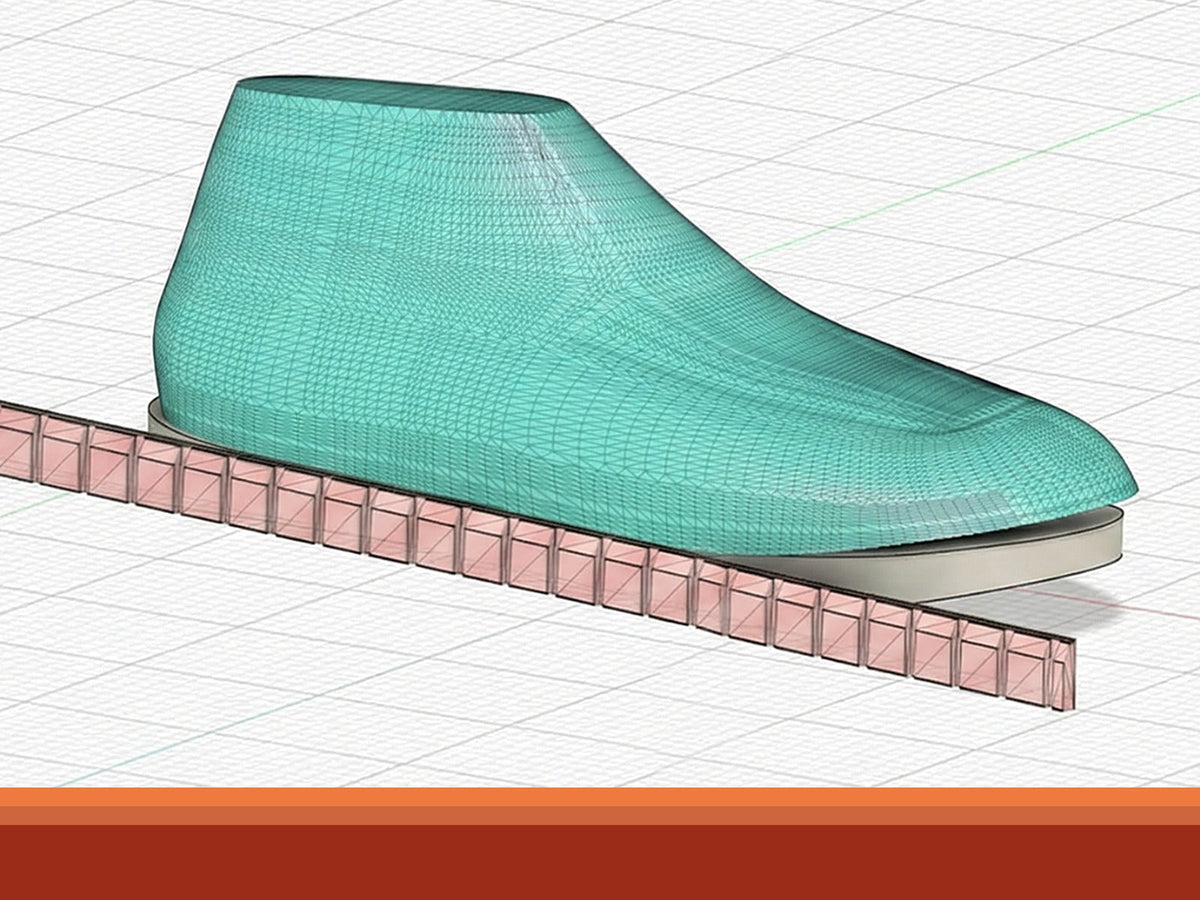
The MODEL T upper is cut from Italian full-grain leather and handcrafted in Portugal around a last built for one person from advanced smartphone 3D scanning and 20 biometric variables. The leather holds the shape of that last, flexes with the foot through a long day and keeps its structure for years with basic care. How the last itself is built is in what a shoe last is and why it sets the fit.
Feel Italian full-grain leather built to your last
The MODEL T shoe is HSA/FSA eligible and covered by the Signature Fit Guarantee.
FAQs
What is the difference between full-grain and top-grain leather?
Full-grain leather keeps the entire outer grain of the hide, where the fibers are densest. Top-grain leather has that surface sanded or split to even it out, which makes it thinner and more uniform but removes some of its strongest fibers. Full-grain leather is the more durable of the two and develops character as it is worn.
Do leather shoes stretch over time?
Full-grain leather molds further to your foot over the first weeks of wear and then holds that shape. The settling takes time because the leather is dense, and that density keeps a well-fitted upper from stretching loose. A shoe built on a last made from your measurements starts close to your foot.
How do I care for full-grain leather shoes?
Wipe the upper clean after wear, let it dry away from direct heat and condition the leather every few weeks with a cream made for full-grain leather. Rotating pairs and using cedar shoe trees helps the upper keep its shape between wears. The full routine is in the IAMBIC guide to full-grain leather care.
How long do full-grain leather shoes last?
With regular care, a full-grain leather upper can last for years of daily wear, because its dense fiber structure resists cracking and holds its shape. How long a pair lasts also depends on the sole, the construction and how often it is rotated. The cost of a pair spread across that life is covered in cost per wear.
Helpful links
Sources
- Dietrich S, Lykhachova O, Cheng X, et al. Simulation of leather visco-elastic behavior based on collagen fiber-bundle properties and a meso-structure network model. Materials. 2021;14(8):1894.
- Mihai A, Seul A, Curteza A, Costea M. Mechanical parameters of leather in relation to technological processing of the footwear uppers. Materials. 2022;15(15):5107.
- International Organization for Standardization. ISO 3376:2020, Leather, physical and mechanical tests, determination of tensile strength and percentage elongation. 2020.
- Meyer M, Dietrich S, Schulz H, Mondschein A. Comparison of the technical performance of leather, artificial leather, and trendy alternatives. Coatings. 2021;11(2):226.
- Akalović J, Skenderi Z, Rogale SF, Zdraveva E. Water vapor permeability of bovine leather for making professional footwear. Leather & Footwear. 2018;67(4):12-17.