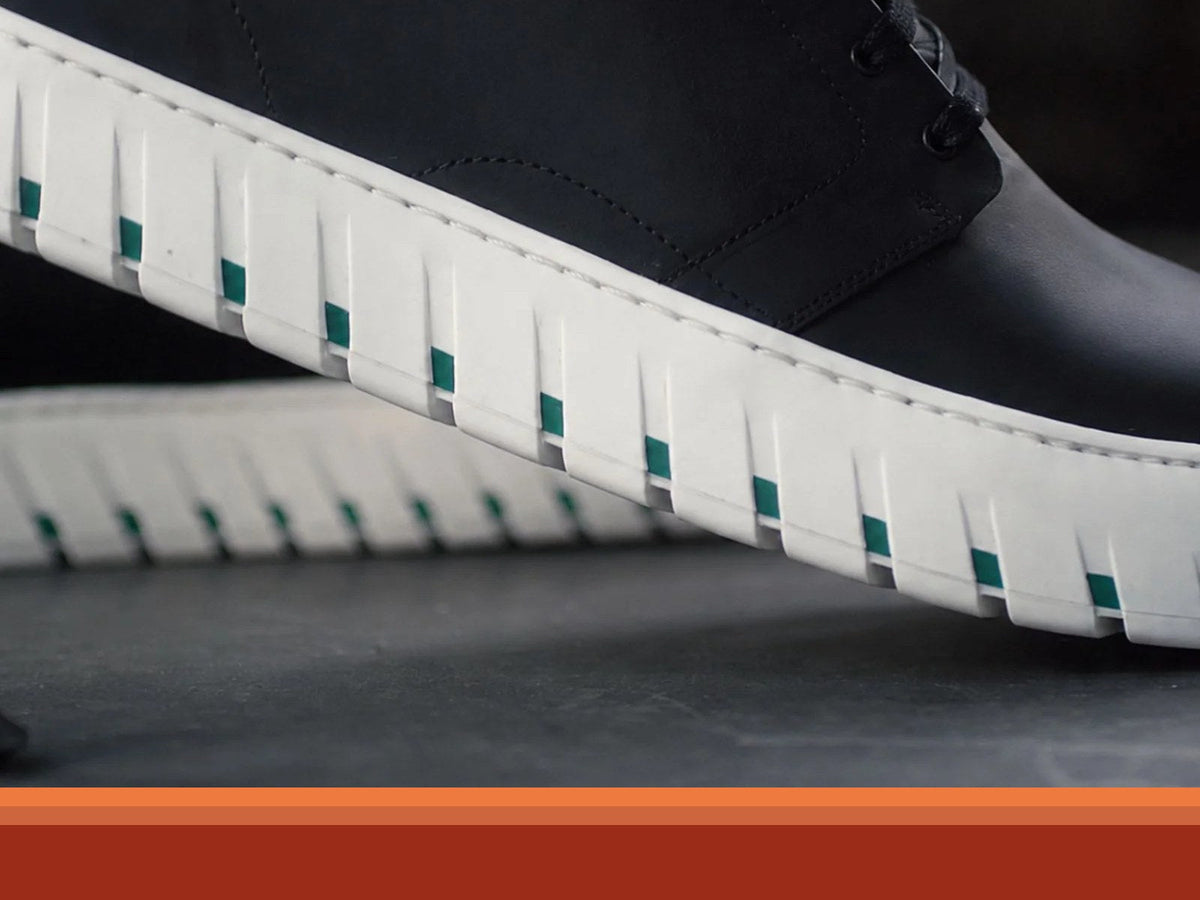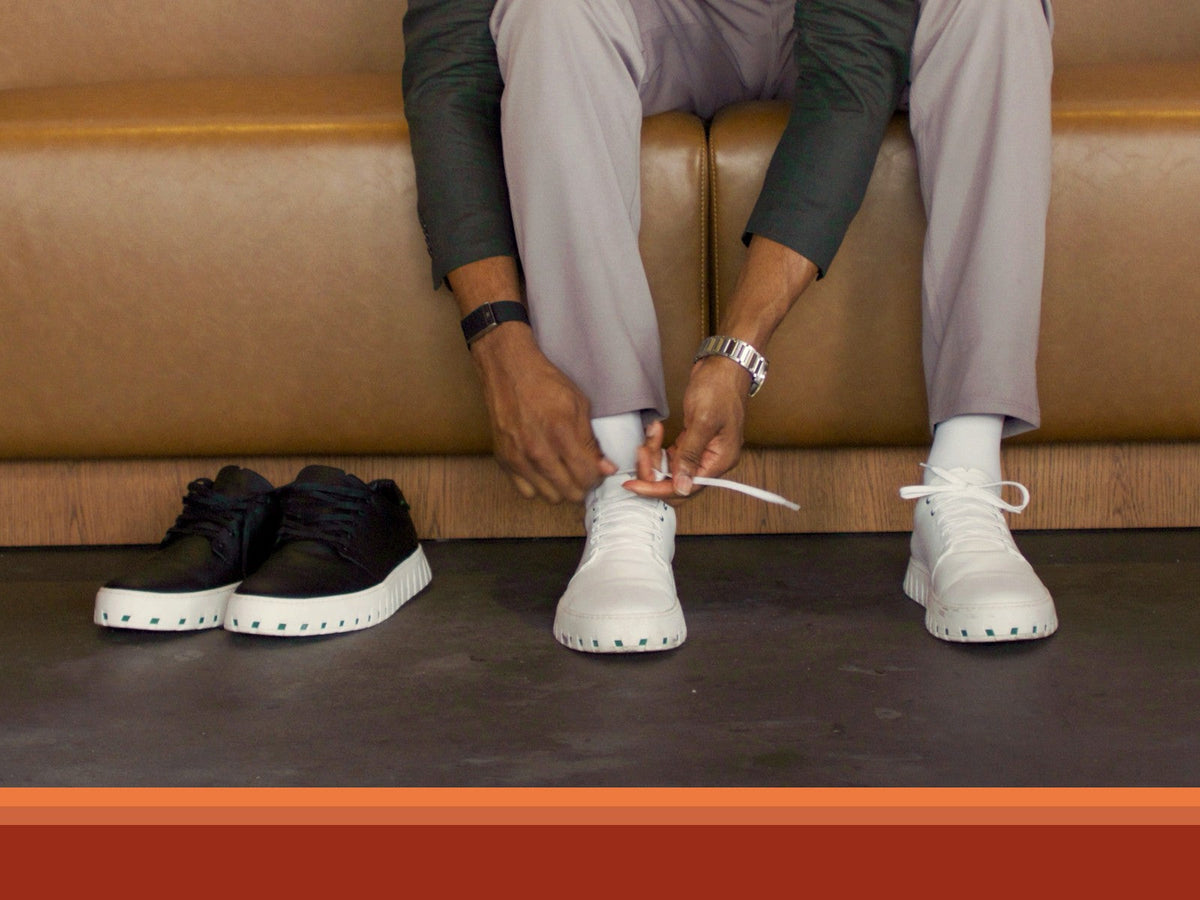
Italian full-grain leather of this quality arrives firm and holds its structure, so every MODEL T needs to be broken in. Over your first wears it softens at the flex points and settles around your foot, and snugness in the first days is the leather doing its work. IAMBIC® co-founders Maeve Wang and Dr. Raza Hassan wrote the steps below for the card that comes in every box.
How to put on your IAMBIC leather shoes
-
Unlace fully
Open laces completely before putting on or taking off your shoes. This protects structure and allows easy entry.
-
Align from the heel
Press your heel firmly into place before lacing. Proper fit starts at the heel and carries forward.
-
Lock in the fit
Tighten laces until your foot feels anchored. The full lacing system holds you securely to the platform.

What to expect as the leather breaks in
- Day 1
- Wear the pair indoors with a medium-thickness sock.
- First week
- The upper softens at the flex points and the collar settles against your heel.
- Onward
- The leather patinas and holds the shape of your foot. Kept clean and rested between wears, this leather softens with use.
Why each step is important
Unlace fully
The MODEL T has a structured upper and a firm heel counter, the stiffened back of the shoe that holds the heel in place. Forcing a foot past tied laces bends that back every time. Open the laces down to the lower eyelets and leave them threaded, then slide your foot in with a shoehorn so the heel collar stays upright. The MODEL T benefits from a shoehorn every time you put the pair on.
Align from the heel
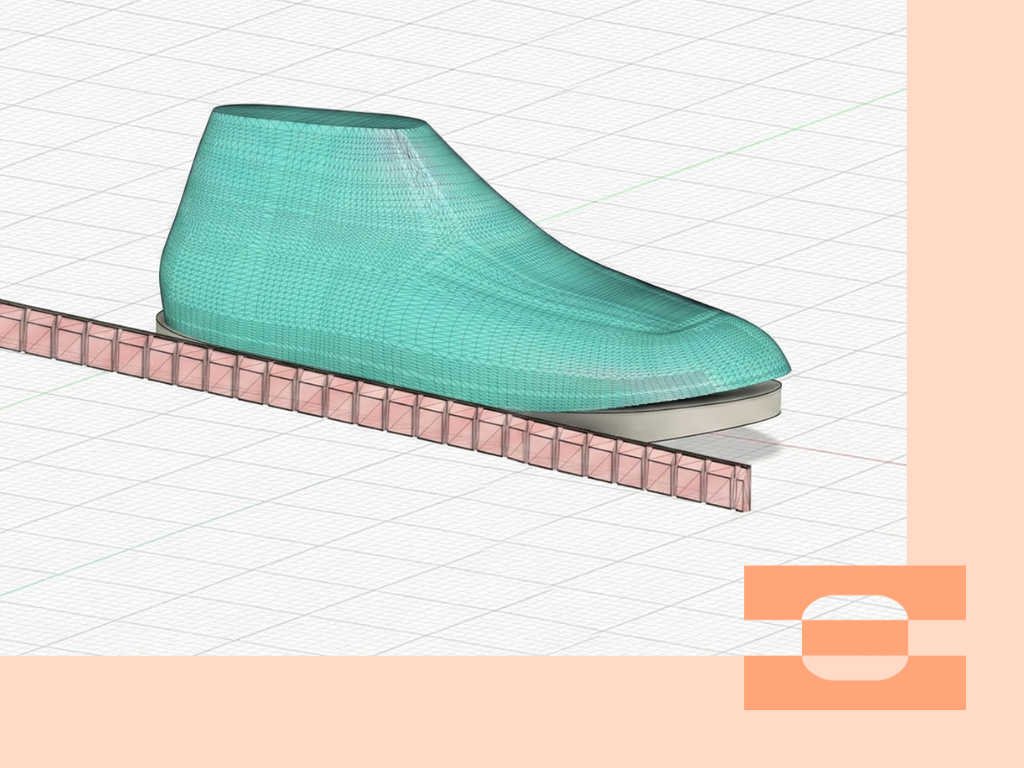
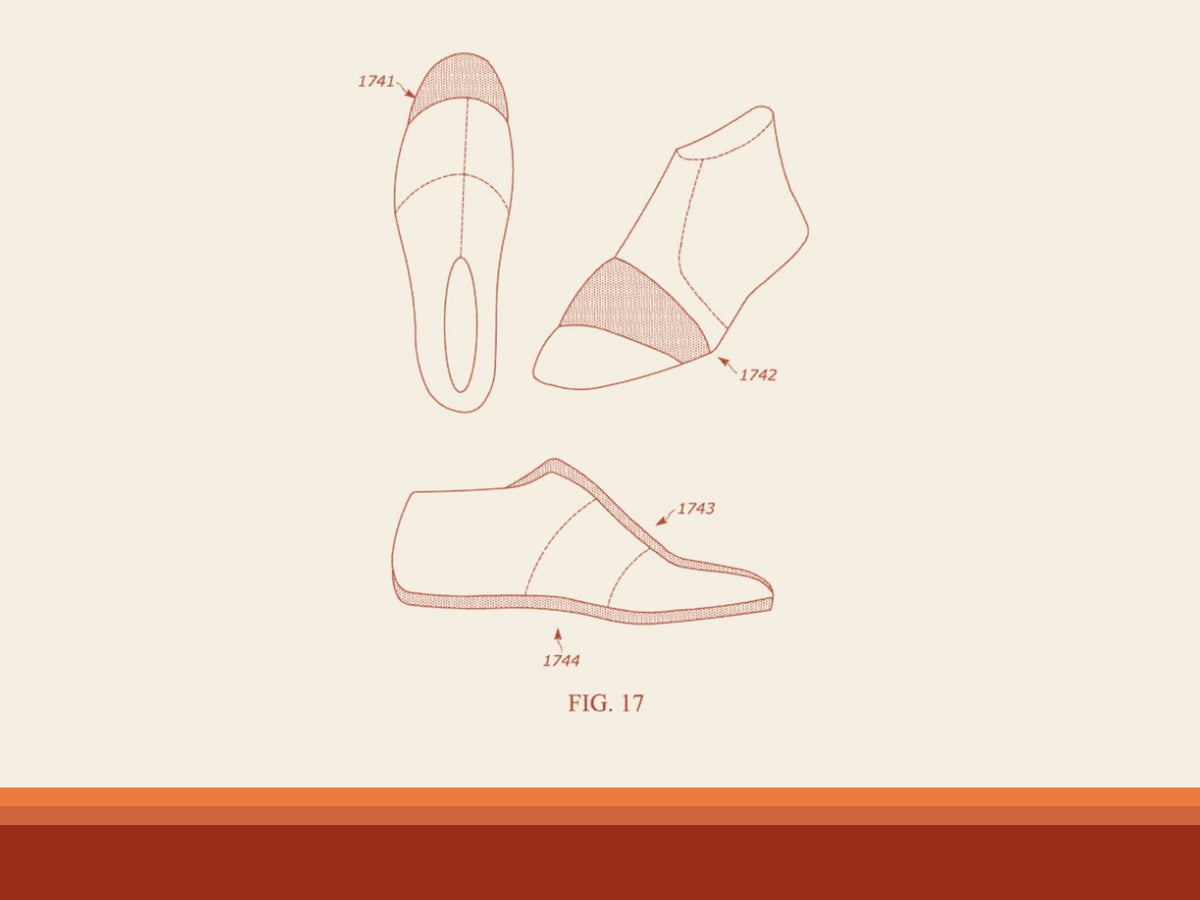
The heel is the anchor point of the fit. Each MODEL T is built on a last made from 20 biometric variables, captured through advanced smartphone 3D scanning and a short questionnaire, and that last sets the heel width and the curve of the heel counter. Press your heel down and back before you lace, so it sits all the way back in the counter. More on the last is in how a shoe last sets the fit.

Lock in the fit
Lace from the lowest eyelet up with even tension, then tie, so the laces hold the foot snugly without pressing into the top of it. A 2011 study in Gait & Posture found that as laces were loosened, people reported significantly more heel slipping and more sliding inside the shoe. A 2021 review of the footwear comfort research, co-authored by Dr. Hylton Menz, IAMBIC’s Scientific Advisor, describes a study in which leaving the top eyelets open felt most comfortable, while lacing every eyelet tightly felt more stable.
Breaking in the leather
Italian full-grain leather is dense and built to last for years, so it arrives firm and holds its structure. Starting indoors on day 1 gives it time to soften at the flex points before a full day out. The fit itself is set before the pair is made. Its shape comes from 20 biometric variables and computational biomechanics, and it factors in how the leather softens and settles as you wear it. More on the material is in is full-grain leather better for shoes.
FAQs
How long does it take to break in the MODEL T?
Breaking in starts on day 1, with the pair worn indoors and a medium-thickness sock. Over the first week the upper softens at the flex points and the collar settles against your heel. Snugness in the first days is normal. Send your wear notes to concierge@iambic.co, and your Concierge checks in as your pair breaks in.
What socks should I wear with the MODEL T?
IAMBIC recommends medium-thickness socks with the MODEL T, heavier than a thin dress sock and lighter than a thick athletic sock. Wearing the same weight of sock through the first weeks keeps each wear consistent while the Italian full-grain leather breaks in, so the heel seats in the same position every time you lace.
Why does my heel slip in my shoes?
Heel slip usually comes from a heel counter that does not match the shape of the heel or from laces that are too loose. In a 2011 lacing study, loosened laces led to significantly more reported heel slipping. Seat the heel before you lace and lace evenly. Each MODEL T last sets heel width from your own measurements.
Sources
- Fiedler KE, Stuijfzand WJA, Harlaar J, Dekker J, Beckerman H. The effect of shoe lacing on plantar pressure distribution and in-shoe displacement of the foot in healthy participants. Gait & Posture. 2011;33(3):396-400.
- Menz HB, Bonanno DR. Footwear comfort: a systematic search and narrative synthesis of the literature. Journal of Foot and Ankle Research. 2021;14:63.
- IAMBIC. In-box card, Maeve Wang and Dr. Raza Hassan. October 2026.
Wear a pair built from your measurements
Every pair is HSA/FSA eligible and covered by the Signature Fit Guarantee.