Precision fit matters because your shoes are the one piece of equipment you use all day, and fit decides how they treat your feet, your stride and your attention by evening. Research links poorly fitted shoes to foot pain, and most adults wear a pair that doesn’t match their feet.
IAMBIC® makes precision-fit, award-winning shoes, each built on a last based on your own measurements. The MODEL T brings bespoke comfort to everyday wear.
Key takeaways
- A 2018 review found that 63 to 72% of the people studied wore shoes that did not match the length or width of their feet.
- The same review linked incorrectly fitted footwear to foot pain, lesser toe deformities, corns and calluses.
- Feet keep changing: In a 2016 study of 168 women, the ball of the foot grew 3.1 to 4.0 mm wider with each decade of age, and pregnancy can leave lasting changes in foot structure.
- A 2021 review found well-fitted, lightweight shoes with soft midsoles and curved rocker soles are generally perceived as most comfortable.
- Cushioned materials reduced discomfort and fatigue in people who stand at work, in a 2018 review of 10 studies.
- Pain research shows that pain interrupts and captures attention, which is why fit reaches past comfort into how you perform.
What is the health case for bespoke comfort?
Fit affects more than comfort, because a shoe that doesn’t match your foot is linked to pain and to lasting foot problems.
A 2018 review by Andrew Buldt and Dr. Hylton Menz found that 63 to 72% of the people studied wore shoes that did not match the length or width of their feet, close to 2 in 3 people. It linked incorrectly fitted footwear with foot pain and with disorders including lesser toe deformities, corns and calluses. Dr. Menz co-authored the review, which predates his role as IAMBIC’s Scientific Advisor.
“We can actually prevent these foot problems if we can actually produce shoes that fit properly. And we haven’t been able to do that up to this point.”
Dr. Hylton Menz, Scientific Advisor, IAMBIC
Standard sizes miss so many feet because of how shoe sizing developed, around a fixed set of lengths and widths.
Why do feet outgrow their shoe size?
Feet change through life, so a size that once fit can stop fitting while the number stays the same.
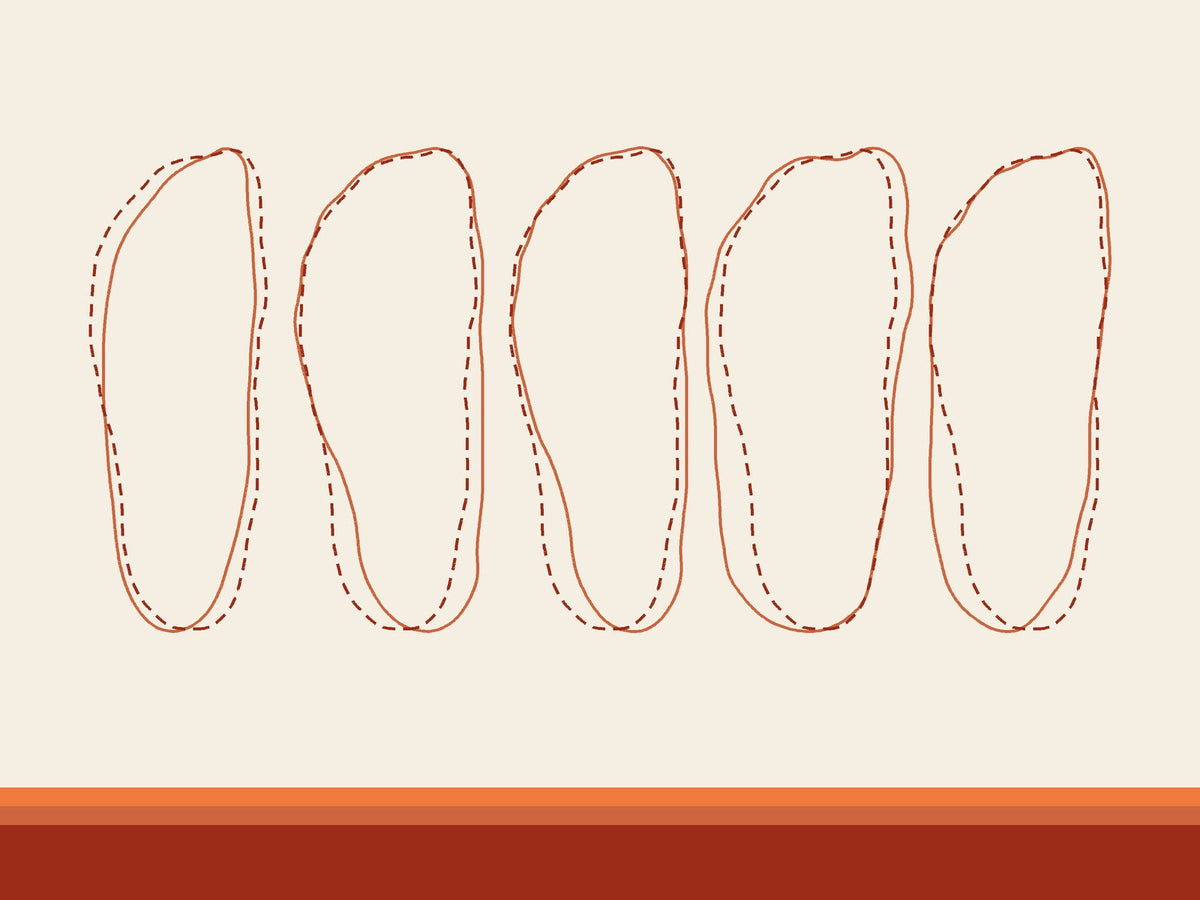
A 2016 study in Maturitas measured the feet of 168 women aged 20 to over 80 and found the ball of the foot wider and larger around with each decade of age, even after adjusting for body mass index. Ball width rose 3.1 to 4.0 mm per decade and leveled off at around age 70 to 75, while foot length was not associated with age. Life events move the measurements further, and pregnancy can leave lasting changes in foot structure. Fit should change with you.
How does fit affect posture and alignment?
Fit sets where your foot sits in the shoe, and posture and alignment build up from that position with every step.
When the heel slips or the forefoot is crowded, your stride adjusts to make room, and you carry that adjustment for the rest of the day. A last that follows the natural geometry of your arch and heel keeps the foot in the position it was measured in.

Movement matters as much as the shoe. Dr. Menz puts walking among the simplest ways to look after your health.
“Walking is one of the simplest and most accessible forms of exercise. It contributes to cardiovascular health, reduces stress, and supports cognitive function.”
Dr. Hylton Menz, as quoted in how walking strengthens executive health and performance
What keeps shoes comfortable from morning to evening?
Fit comes first, then cushioning, and the research shows both shape how a shoe feels by the end of the day.
A 2021 review of the footwear comfort research, by Dr. Menz and Daniel Bonanno, found that well-fitted, lightweight shoes with soft midsoles and curved rocker soles are generally perceived as most comfortable. It also found that comfort is influenced by the task and by “anatomical and physiological differences between individuals.” Softness is only part of it, as the difference between cushion and support shows.
Pain research shows that pain interrupts and captures attention. A shoe that pinches, rubs or lets the heel slip draws on the same attention you need for a meeting or a long afternoon of work.
| What the research says | How the MODEL T is built | |
|---|---|---|
| Health | Poorly fitted shoes are linked to foot pain, corns and calluses | The last matches your length, width and arch |
| Comfort | Comfort depends on fit and on the person | A questionnaire captures how you like a shoe to feel |
| Standing time | Cushioned materials reduced discomfort and fatigue at work (2018 review) | Cushioning set from your questionnaire |
| Performance | Pain interrupts and captures attention | A shoe that fits stops competing for that attention |
Why does personalization change fit?
Standard sizing describes length, and personalization captures the rest of what makes your foot yours.
IAMBIC captures 20 biometric variables, including differences in arch height and volume, to match the shoe to your anatomy.
- Data-driven precision: A 3-photo smartphone scan maps your geometry in millimeters.
- Human review: The IAMBIC Concierge team reviews your fit data.
- Continuous evolution: Sole Print™ wear photos inform the last for each future pair.
How does IAMBIC build precision fit into the MODEL T?
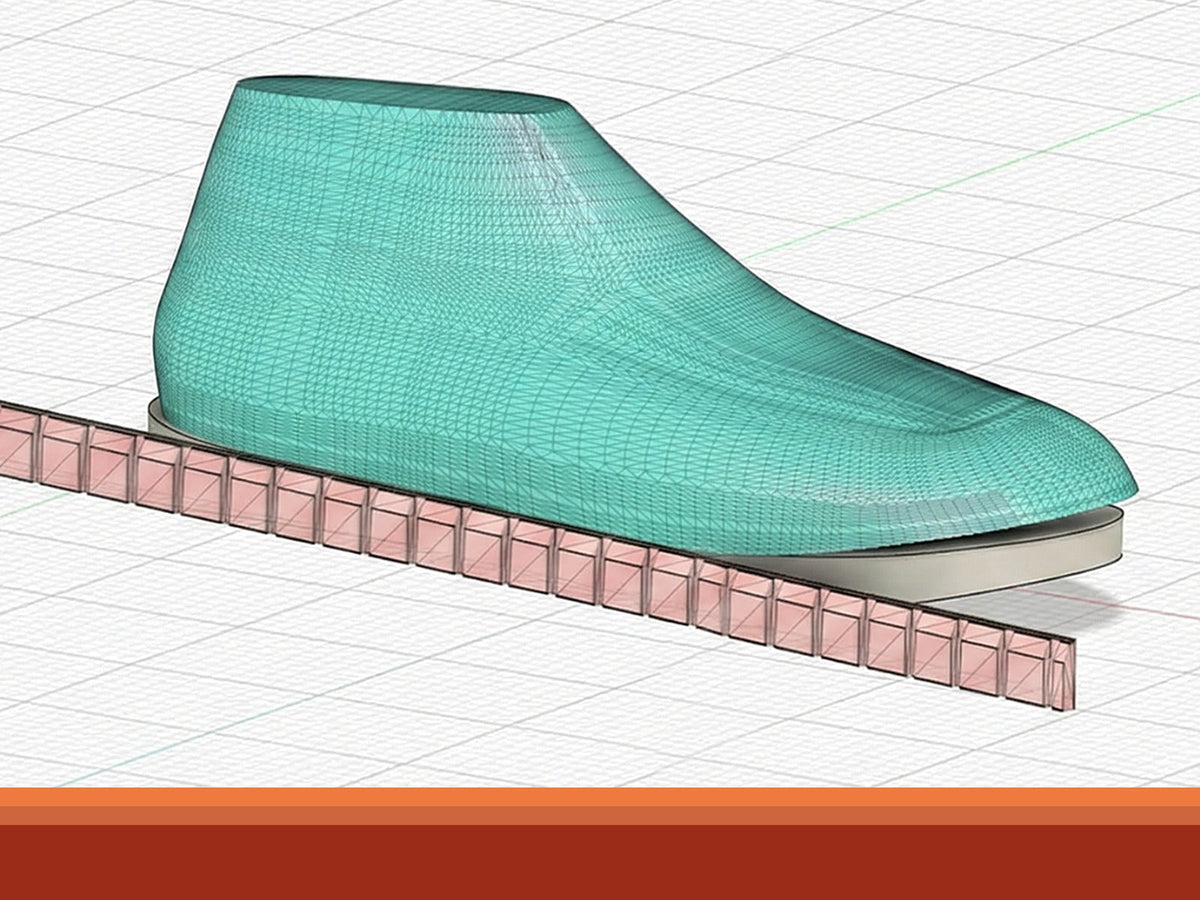
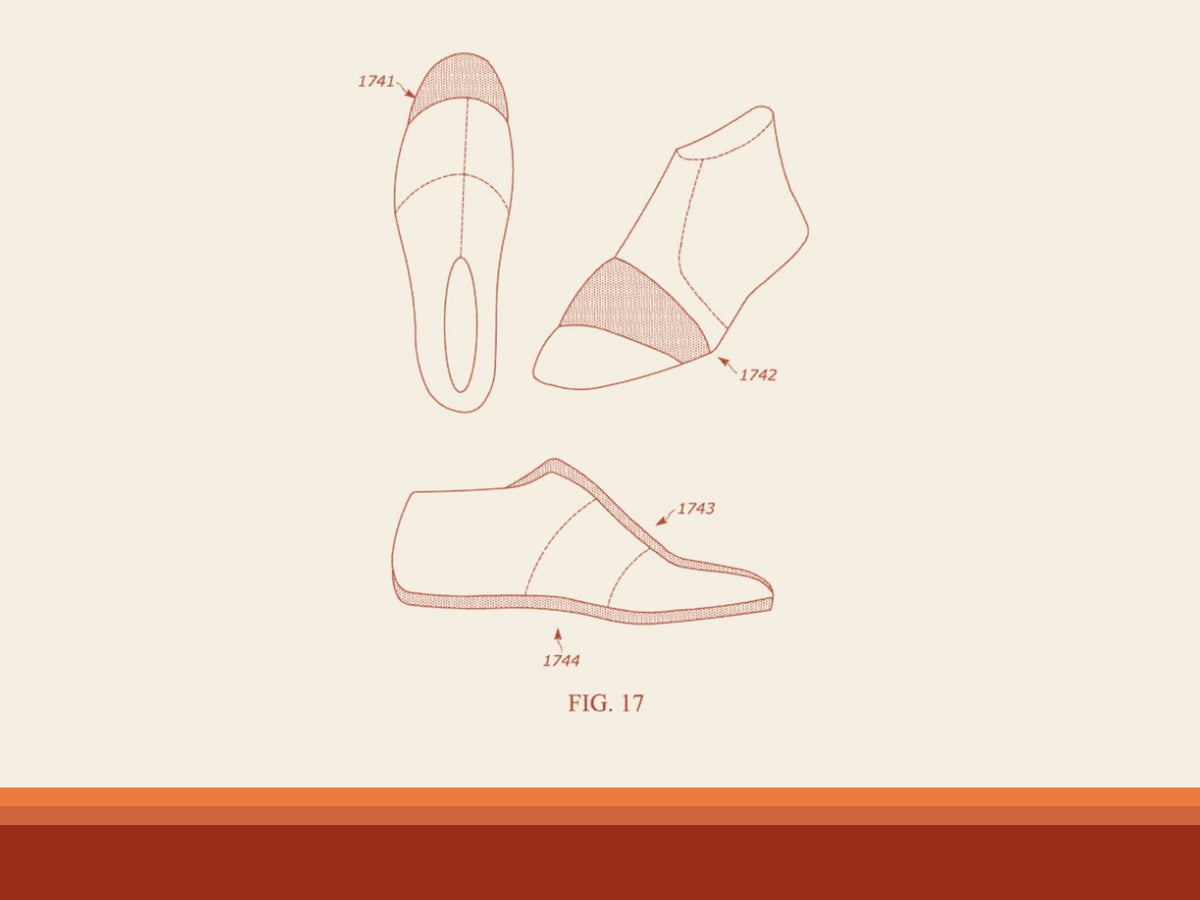
IAMBIC builds fit through the last, the foot-shaped form each shoe is built around.
In the IAMBIC app, you take 3 photos of each foot on printer paper, and NASA-grade computer vision analyzes them. A short questionnaire covers your comfort preferences and how you spend your day. Together, the scan and the questionnaire capture 20 biometric variables, and IAMBIC builds a new last for your MODEL T from them, fit down to the millimeter.
Each precision-fit pair is designed in New York City, handcrafted in Portugal from Italian full-grain leather and delivered in about 4 weeks. The leather molds further to your foot over the first weeks of wear, and the founders share how to break in a MODEL T. With Sole Print™ in the IAMBIC app, you photograph each worn shoe from 5 angles, and that wear data informs the last for your next pair.
The MODEL T was named a TIME Best Invention and developed with technology supported by the U.S. National Science Foundation.
IAMBIC is not a medical device and does not diagnose or treat any condition.
See what a last built from your own measurements feels like
The MODEL T shoe is HSA/FSA eligible and covered by the Signature Fit Guarantee.
Helpful links
- MODEL T
- IAMBIC technology
- Fit Process 101: How a MODEL T is made
- What foot research says about AI-tailored shoes
Sources
- Buldt AK, Menz HB. Incorrectly fitted footwear, foot pain and foot disorders: A systematic search and narrative review of the literature. Journal of Foot and Ankle Research. 2018;11:43.
- Menz HB, Bonanno DR. Footwear comfort: A systematic search and narrative synthesis of the literature. Journal of Foot and Ankle Research. 2021;14:63.
- Speed G, Harris K, Keegel T. The effect of cushioning materials on musculoskeletal discomfort and fatigue during prolonged standing at work: A systematic review. Applied Ergonomics. 2018;70:300-314.
- Eccleston C, Crombez G. Pain demands attention: A cognitive-affective model of the interruptive function of pain. Psychological Bulletin. 1999;125(3):356-366.
- Ansuategui Echeita J, Hijmans JM, Smits S, Van der Woude LHV, Postema K. Age-related differences in women’s foot shape. Maturitas. 2016;94:64-69.
- Segal NA, Boyer ER, Teran-Yengle P, Glass NA, Hillstrom HJ, Yack HJ. Pregnancy leads to lasting changes in foot structure. American Journal of Physical Medicine & Rehabilitation. 2013;92(3):232-240.
- Dr. Hylton Menz, interview with IAMBIC, November 7, 2024.