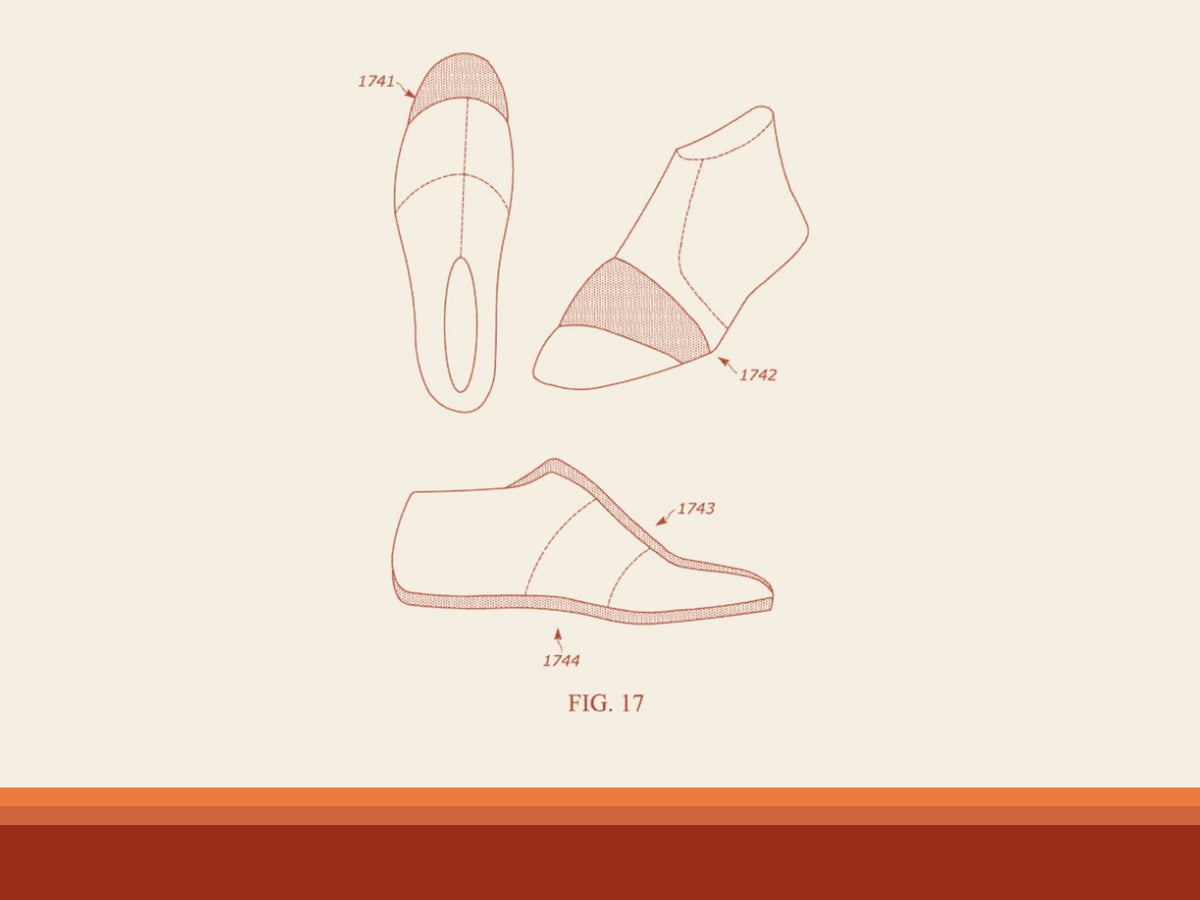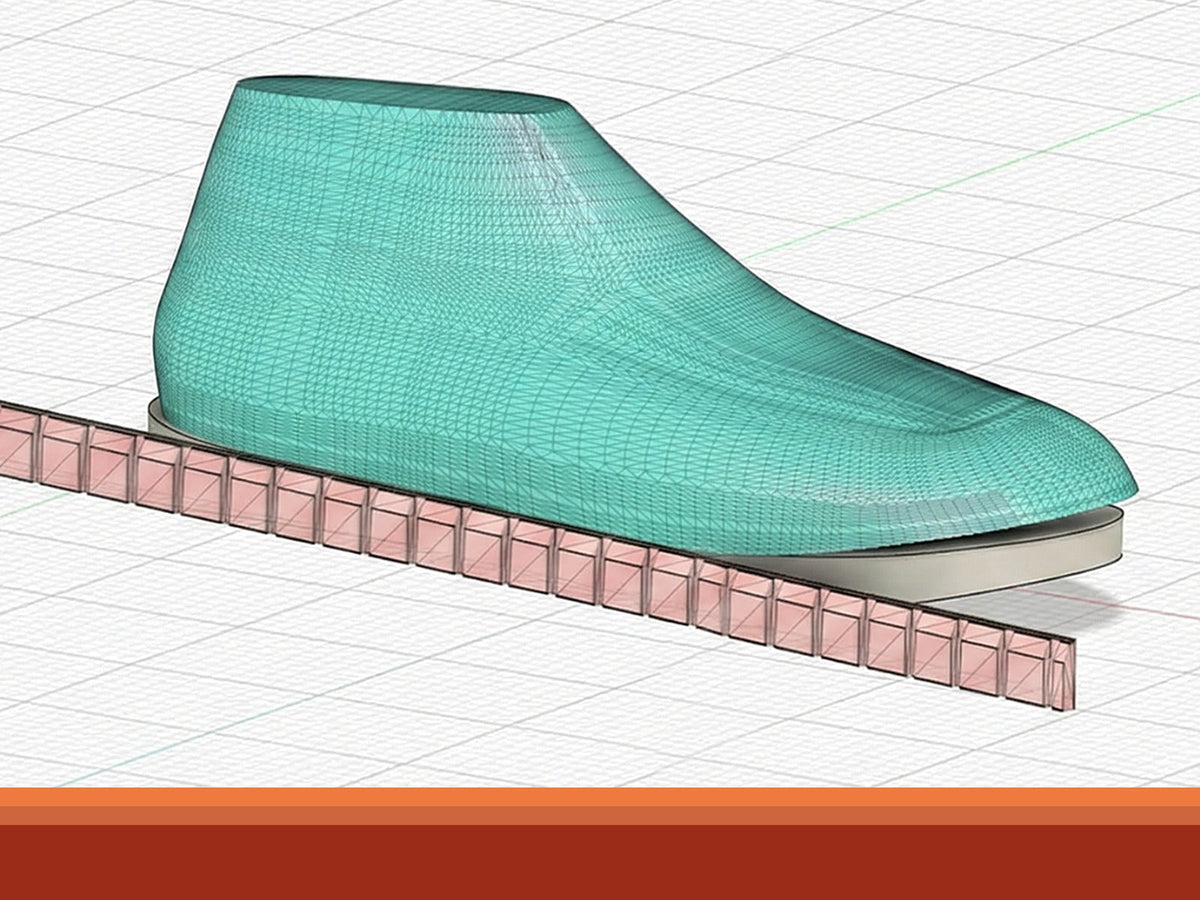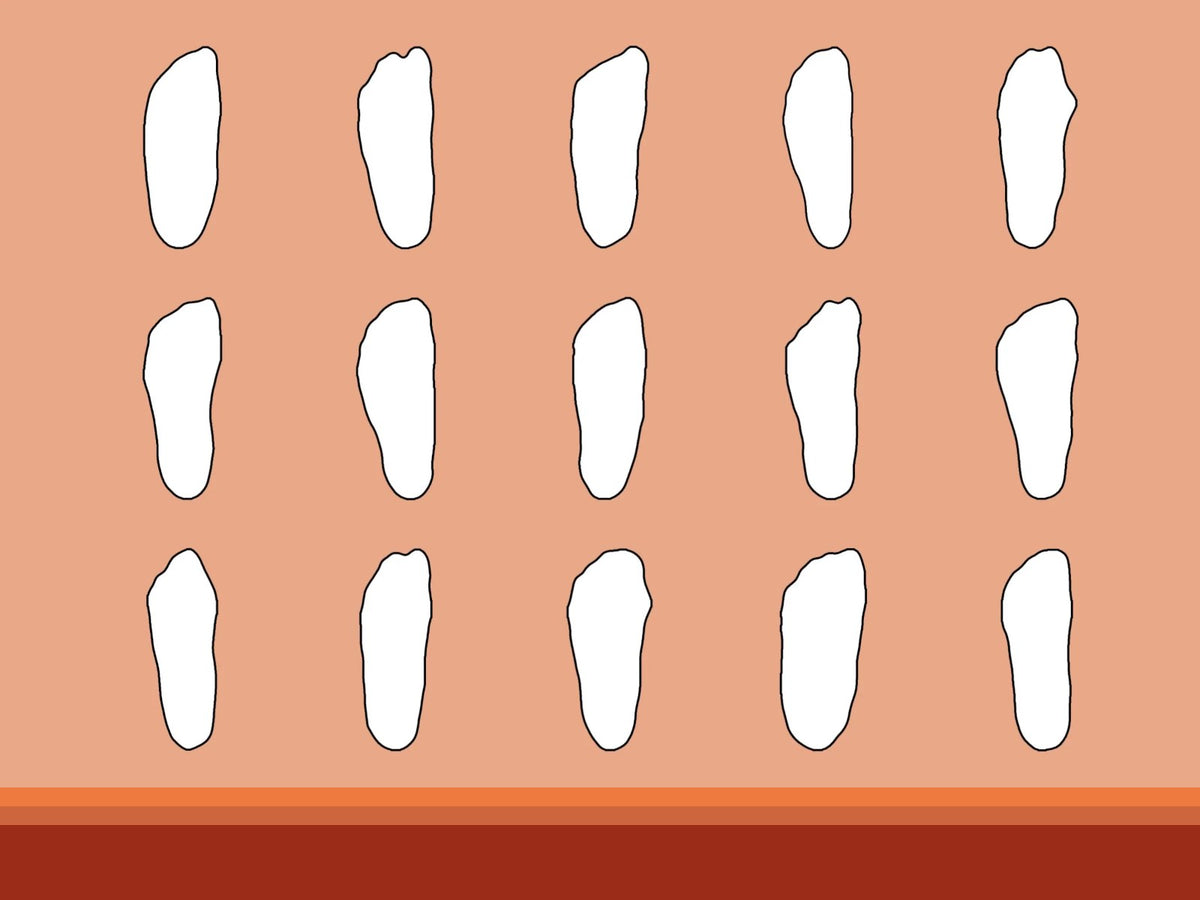
Most shoes are built on a last shaped like an average foot, and most people do not have one. A 2018 review of the research in the Journal of Foot and Ankle Research found that between 63 and 72 percent of the people studied wore shoes that did not fit the width or length of their feet. AI-tailored shoes reverse the order: They measure one person first and build the last from those measurements. IAMBIC® makes the MODEL T this way.
Why don’t standard shoes fit most people?
Standard shoes are made in volume on a small number of lasts, the foot-shaped forms a shoe is built around, and each last copies an average foot. A size records length. A width letter adds a second measurement. Dr. Hylton Menz, a professor at La Trobe University and IAMBIC’s Scientific Advisor, describes what that leaves out: “So when you go to a shoe shop, you tend to find a shoe that matches the length of your foot, but they may not actually be appropriate for you.”
Feet differ in more places than a size chart can hold. “There’s a lot of variation skeletally in the foot, but there’s also a lot of variation in the actual soft tissue shape and size of the foot,” he says. A shoe built on an average last presses or slips wherever your foot departs from that average.

What does a poor fit do to your feet?
Shoes that do not fit are linked to foot pain and to lasting foot problems. The 2018 review by Andrew Buldt and Dr. Menz found that incorrectly fitted footwear was associated with foot pain and with disorders including lesser toe deformities, corns and calluses. One study it covers, of 176 older adults, tied moderate to severe hallux valgus, the joint deformity known as a bunion, to indoor shoes too narrow for the foot. Dr. Menz co-authored the review, which predates his role as IAMBIC’s Scientific Advisor. IAMBIC is not a medical device and does not diagnose or treat any condition.
How do AI-tailored shoes measure a foot?
AI-tailored shoes replace the size chart with measurements of one person. In the IAMBIC app, you take 3 photos of each foot on printer paper using advanced smartphone 3D scanning, then answer a short questionnaire about your comfort preferences and how you spend your day. Together they capture 20 biometric variables. The fitting takes about 10 minutes, from home.
AI models trained on IAMBIC’s own dataset of 50,000 fit profiles turn those variables into a digital last for one person, fit down to the millimeter. Each MODEL T is then handcrafted in Portugal from Italian full-grain leather and delivered in 4 weeks. The fit system is built on government-supported biomechanics and AI development, backed by the Center for Biotechnology at Stony Brook University, a New York State Center for Advanced Technology, and the U.S. National Science Foundation. In 2023, TIME named the MODEL T a TIME Best Invention. The step-by-step process is in Fit Process 101.
Dr. Menz describes standard fitting, from the clinician’s side, as guesswork. “It’s a bit of a black box. We don’t really know what we’re doing,” he says. “Whereas with IAMBIC’s approach, we know that we can actually look at the individual, work out the shape of their foot, work out what sort of footwear they need, and then match them up to the shoe that they need.”
Where comfort comes in
Two people with matching measurements can still want different shoes. A 2021 review of the footwear comfort research, by Dr. Menz and Daniel Bonanno, found that well-fitted, lightweight shoes with soft midsoles and curved rocker soles are generally perceived as most comfortable. It also found that comfort is influenced by the task and by “anatomical and physiological differences between individuals.” The IAMBIC fit accounts for those differences by pairing the scan with a questionnaire, and the 20 biometric variables come from both.
What happens after the first pair?
Fit continues after delivery. Italian full-grain leather molds further to the foot over the first weeks of wear, which takes time because the leather is dense and built to last for years. With Sole Print™, you photograph each worn shoe from 5 angles, and that wear data updates the last for your next pair, so the fit improves pair over pair.
About Dr. Hylton Menz
Dr. Hylton B. Menz is a podiatrist, a professor at La Trobe University in Melbourne and a Fellow of the Australian Academy of Health and Medical Sciences. His research covers the prevalence, risk factors and non-surgical management of foot disorders, including therapeutic footwear. In 2020, Expertscape ranked him the world’s top expert in foot research. He has served as IAMBIC’s Scientific Advisor since 2020.
FAQs
What are AI-tailored shoes?
AI-tailored shoes are built on a last made from one person’s measurements. IAMBIC pairs advanced smartphone 3D scanning with a short questionnaire to capture 20 biometric variables, and AI models trained on 50,000 fit profiles build a digital last from them. Each MODEL T is handcrafted in Portugal from Italian full-grain leather and delivered in 4 weeks.
Why do my shoes fit in length but still hurt?
A shoe size is mainly a length measurement, and feet also differ in width, arch height and soft tissue. A shoe built on an average last can press or slip wherever your foot differs from that average. Research links poorly fitted shoes to foot pain, corns and calluses.
How long does an AI shoe fitting take?
The fitting takes about 10 minutes, from home. The IAMBIC app walks you through 3 photos of each foot on printer paper and a questionnaire on your comfort preferences and daily routine. There is no store visit and no size to choose, because the last is built from your own measurements.
What if the fit is not right?
Every MODEL T is covered by the Signature Fit Guarantee, with refits until the fit is right. Questions about fit go to a trained biomechanical engineer on the IAMBIC team. The leather also molds further to your foot over the first weeks of wear, which takes time because Italian full-grain leather is dense and built to last for years.
Sources
- Buldt AK, Menz HB. Incorrectly fitted footwear, foot pain and foot disorders: a systematic search and narrative review of the literature. Journal of Foot and Ankle Research. 2018;11:43.
- Menz HB, Bonanno DR. Footwear comfort: a systematic search and narrative synthesis of the literature. Journal of Foot and Ankle Research. 2021;14:63.
- Dr. Hylton Menz, interview with IAMBIC, November 7, 2024.
- La Trobe University. Hylton Menz awarded AAHMS fellowship. 2020.
- IAMBIC fit dataset, 50,000 fit profiles, 2026.
Start with your own measurements
Every pair is HSA/FSA eligible and covered by the Signature Fit Guarantee.