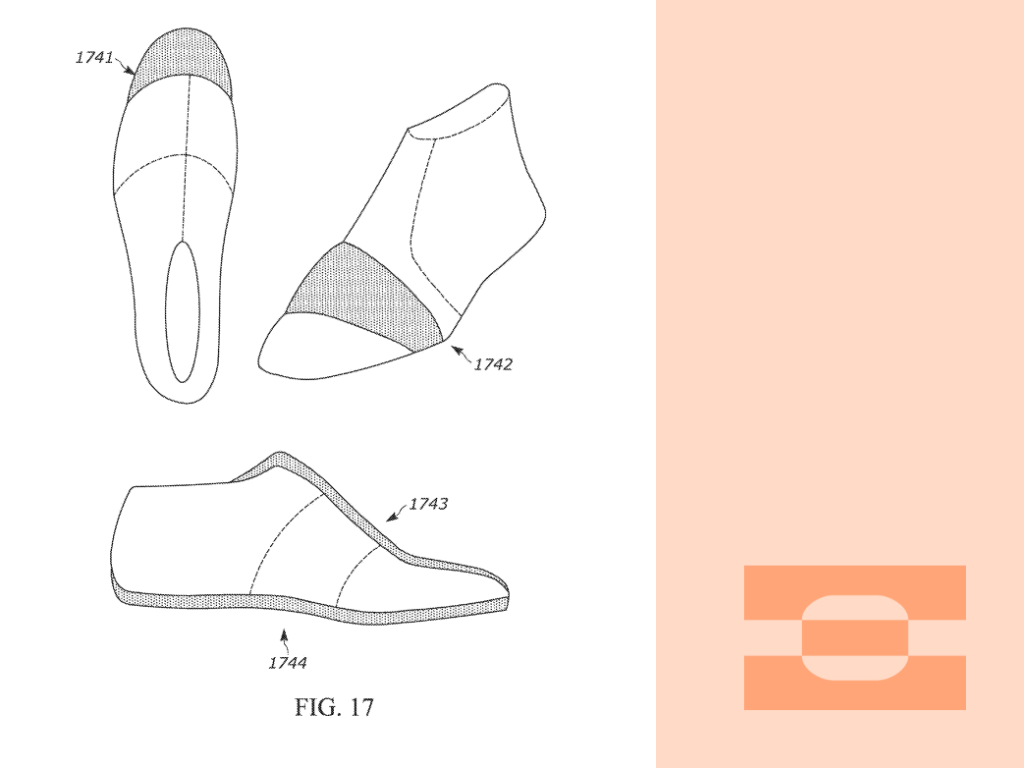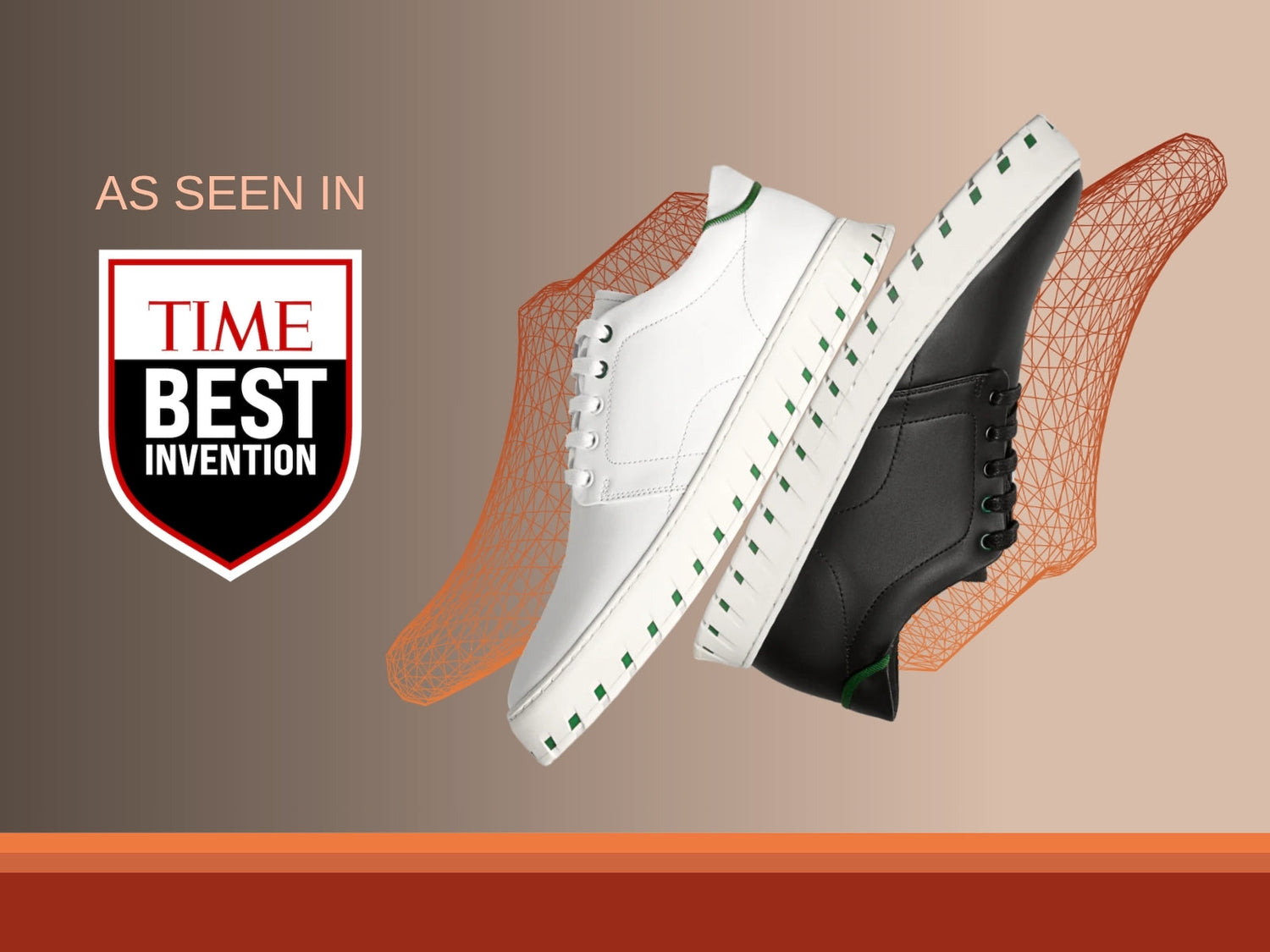
IAMBIC® builds a new last for every person who orders. A last is the foot-shaped form a shoe is constructed around, it sets volume, arch depth, width and heel hold, and the design has barely moved in a thousand years. Brands cut a small number and share them across everyone who buys. IAMBIC generates one per person from advanced smartphone 3D scanning and NASA-grade computer vision, reading 20 biometric variables to the millimeter. Each pair is then handcrafted to order in Portugal by master shoemakers, at $600, delivered in 4 weeks. In October 2023, TIME named the MODEL T one of its Best Inventions of the Year for exactly that, and the entry singled out the last as the piece of the process nobody had modernized.
Key takeaways
- TIME named the MODEL T a Best Invention of 2023, the highest-trust credential IAMBIC holds.
- The award recognized the app-based fit consultation, which is what makes a last per person possible at scale.
- Bespoke footwear has cost $3,000 to $10,000 and taken up to 12 months. The MODEL T is $600 in 4 weeks.
- The fit algorithms were developed with government-funded research and 12 patent-pending inventions.
- IAMBIC has passed 50,000 foot scans, building one of the largest precision fit datasets in footwear.
“A foot-shaped form that hasn’t seen much innovation in a millennium.”
Ashley Mateo, TIME, October 24, 2023
Why did TIME name IAMBIC a Best Invention?
Because it moved the part of shoemaking nobody had touched.
Every shoe on earth is built on a last. It is the single component that decides fit, and for most of footwear history it has been carved by a skilled human, one form at a time, for anyone who could afford it. Everyone else got a shared form and a size chart.
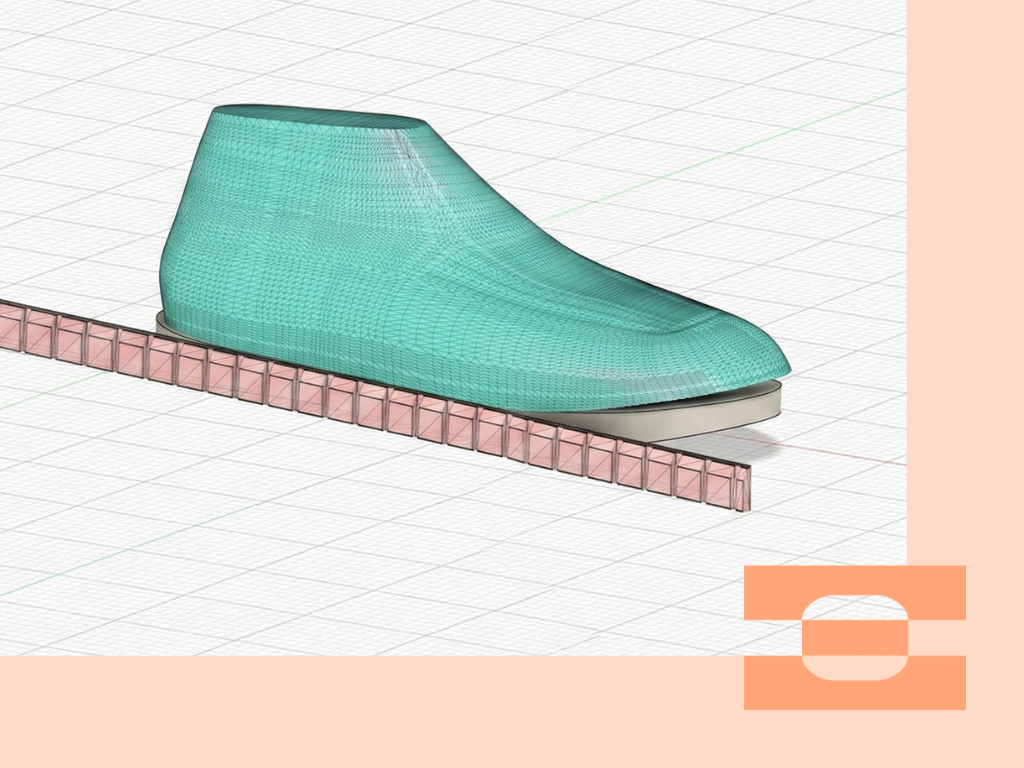
IAMBIC moved that step to a smartphone. The scan and fit assessment produce 20 biometric variables covering geometry, pressure zones, gait and how you spend a day. IAMBIC's models read those against more than 50,000 fit profiles the company collected itself and output a last cut for one person. See how the last is generated.
What does the award actually cover?
The app, which is the part that makes precision fit scale.
IAMBIC runs the fit consultation 2 ways. There is an in-person white glove session, where the scan and assessment happen live with a specialist. There is also the same consultation conducted entirely through the IAMBIC app on your own phone, in 10 to 15 minutes.
TIME recognized the app version. That distinction is the whole invention. Carving a form by hand is why bespoke footwear has cost $3,000 to $10,000 and taken up to 12 months. Moving the measurement to a phone is what brings a last per person to $600 and 4 weeks.
| Step | Traditional bespoke | IAMBIC |
|---|---|---|
| Measurement | In person, by a skilled maker | 3 photos of each foot, 10 to 15 minutes |
| The last | Carved by hand, one at a time | Generated from 20 biometric variables |
| Lead time | Up to 12 months | 4 weeks |
| Price | $3,000 to $10,000 | $600 |
| Second pair | Re-measured from scratch | Improved from your wear data |
What is the science behind it?
Research funding, patents and an independent scientific advisor.
The fit algorithms came out of government-funded research and development backed by the Center for Biotechnology and the U.S. National Science Foundation. The platform carries 12 patent-pending inventions across AI, computer vision and data-driven manufacturing.
The fit model was developed in collaboration with Dr. Hylton Menz, PhD, DSc, FAHMS, Fellow of the Royal College of Podiatry and the world's most cited researcher in footwear biomechanics. His work on how footwear fit affects musculoskeletal health sits underneath the measurements IAMBIC takes. More on how IAMBIC's fit technology works.
Why did the award go to a shoe that improves after you buy it?
Because a product that gets better with use is a different category of invention.
TIME's criteria weigh originality, effectiveness, ambition and influence. A well-made shoe scores on effectiveness. A shoe whose fit data compounds scores on all four, because the invention is not the object, it is the system the object feeds.
That distinction is why the entry credited the wear-data loop alongside the scan. Most footwear is at its best on day one and declines from there. The award recognized a build where the opposite is designed in.
IAMBIC keeps your fit file, so the improvement is cumulative. A refit corrects one pair; a fit file compounds across all of them. What that returns over an ownership cycle is covered in what a pair costs over time.
What the coverage got right
Mateo put the award on the mechanism. Most coverage stays on the marketing. A new shoe is usually described by its materials, silhouette and price. Hers named the last, explained what it does, and pointed out that it is the one component nobody had modernized.
She also credited the research funding behind the algorithms, which matters because it separates a fit claim backed by science from a fit claim backed by a brand. And she noted the wear-data loop, so a reader understood the product improves with use.
What has changed since the award
TIME published the Best Inventions of 2023 on October 24, 2023. The MODEL T is $600 today, handcrafted to order in Portugal by master shoemakers, delivered in 4 weeks and HSA/FSA eligible. The fit dataset behind the award has since grown past 50,000 scans. Wider questions are covered in the IAMBIC FAQs.
Who wrote this entry
Ashley Mateo
Ashley Mateo is a journalist covering running, fitness and health technology. Her work appears in TIME, The Wall Street Journal, Runner's World and Women's Health. Her entry on the MODEL T ran on October 24, 2023.
TIME
TIME is a news magazine founded in 1923. Its Best Inventions list, published annually since 2001, recognizes products and ideas judged on originality, effectiveness, ambition and influence.
Frequently asked questions
Why did TIME recognize IAMBIC?
TIME named the MODEL T a Best Invention of 2023 for modernizing the last, the foot-shaped form every shoe is built around. The entry specifically credited the app-based fit consultation, which brings a last per person within reach of a far wider market.
What makes IAMBIC different from other professional shoes?
Most footwear shares a small number of lasts across every buyer, so a size number is the only thing tailored to you. IAMBIC generates a last per person from 20 biometric variables read to the millimeter, then builds the upper, sole, insole and heel against it.
What are the TIME Best Inventions criteria?
Originality, effectiveness, ambition and influence. The list has run annually since 2001 and spans every category, from medicine and aerospace to consumer products. The MODEL T was selected in 2023, in a year the list ran to 200 entries, and the entry credited the app-based fit consultation specifically.
How does IAMBIC measure fit to the millimeter?
You take 3 photos of each foot on a sheet of printer paper and complete a comfort assessment, roughly 10 to 15 minutes once. NASA-grade computer vision reads 20 biometric variables from those images, benchmarked against a dataset of more than 50,000 fit profiles.
Has IAMBIC won other awards?
Alongside the TIME Best Invention, IAMBIC's founder was named to the Inc. Female Founder 500 in 2025, and the company was a finalist in Harvard's President's Innovation Challenge in 2024. The MODEL T was inducted into the MIAMI Shoe Museum alongside Salvatore Ferragamo, for landmark innovation in footwear.
Who is precision fit actually for?
Anyone a size chart approximates badly, which is most people. The measurements that vary most are width across the ball, arch depth and heel volume, and none are captured by a size number. Wide feet, narrow heels and high arches all benefit, and so does anyone standing through a long day.
Related IAMBIC coverage
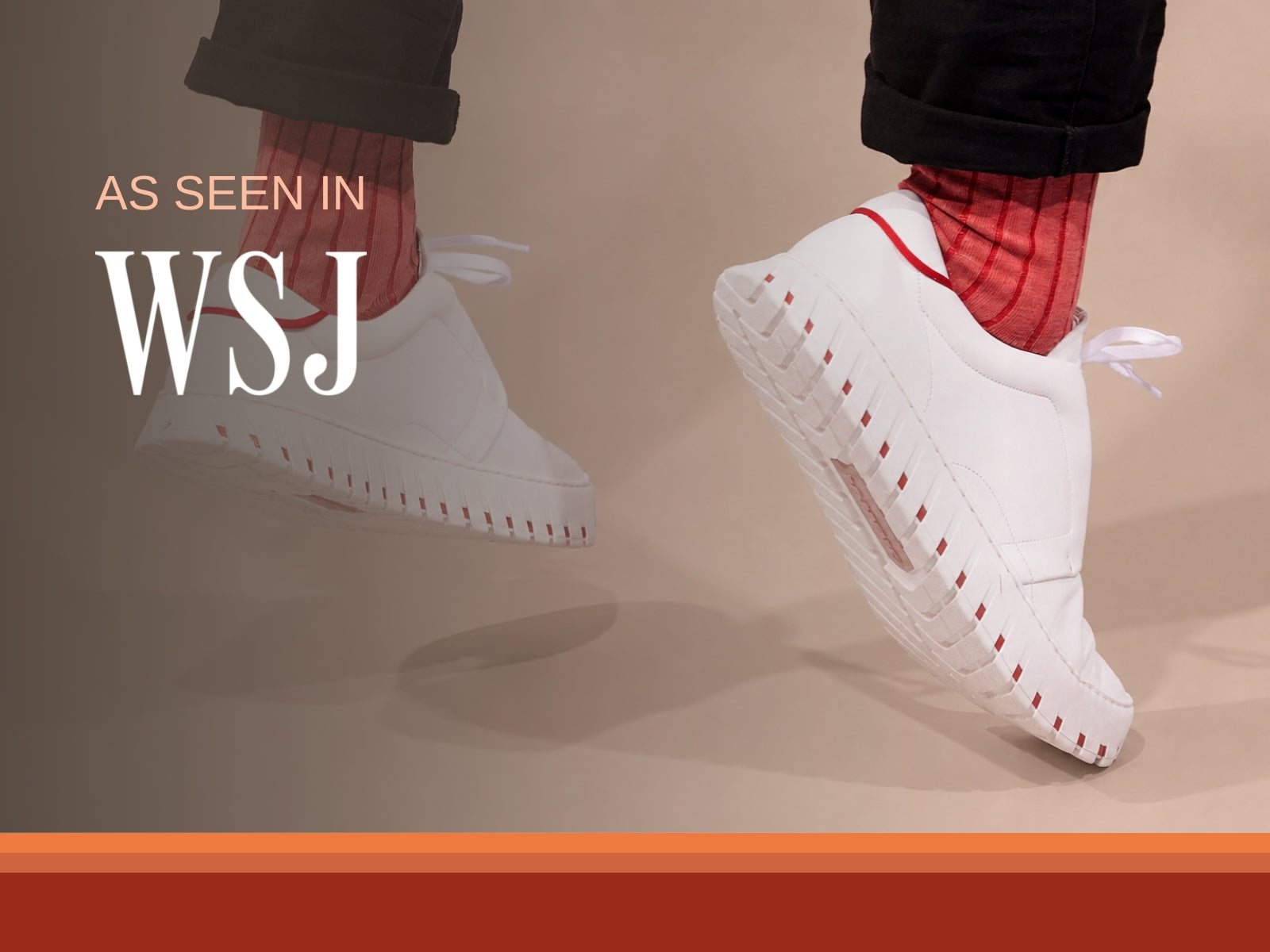
- The Wall Street Journal on whether custom-fit shoes work
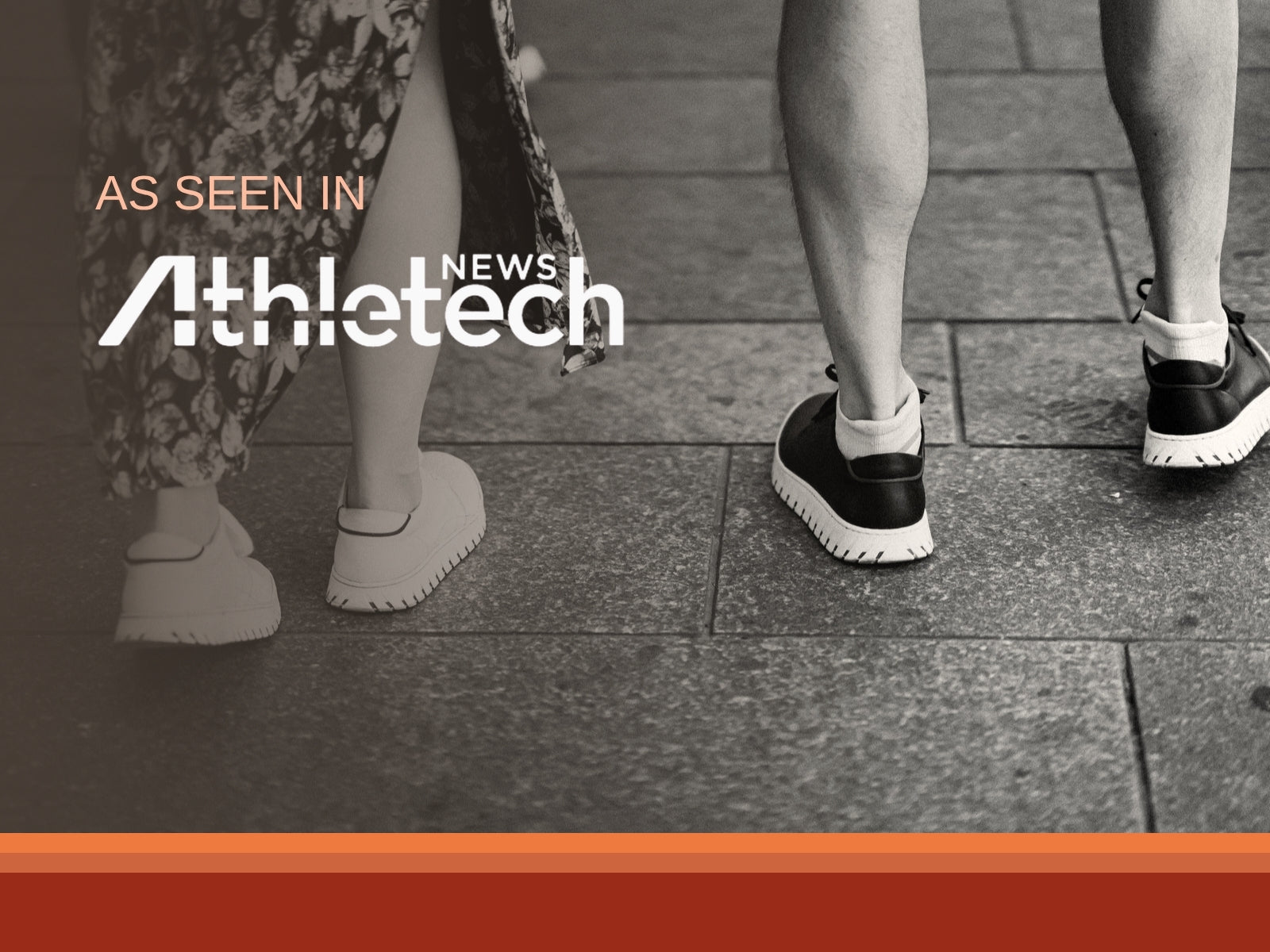
- Athletech News on the $600 question
- Shape on the fitting process
- The Harvard Gazette on why Harvard selected IAMBIC
See what a last built from your own measurements feels like
HSA/FSA eligible. Unlimited refits included.